Best Grocery Budget Calculator App 2026
A calculator tells you the total after you type every number in. A budget app tells you as you shop — and warns you before you go over. Here's the difference.
Key Takeaways
• Why calculators and spreadsheets fail at the actual checkout moment.
• What real-time budget tracking looks like in a grocery app.
• How price memory eliminates most of the manual entry.
Put this advice to work on your next grocery trip
Plan your list, set a budget, and track the total while you shop.
Explore GroceryBudget features →

If you've ever opened a spreadsheet in a grocery store, typed in a few items, lost your place, and given up — you're not alone. The idea is sound: know your total before you get to the register. The execution with a spreadsheet is painful.
Most grocery budget calculators have the same problem. They require you to manually type a price for every item, remember what you added, and do all of this while navigating a store with a cart. The cognitive load is too high and people stop using them within a week.
Here's what actually works.
What Makes a Good Grocery Budget Calculator
The best grocery budget calculators share a few traits:
Real-time totals. Your running total updates as you add items, not after you've finished entering everything. You should be able to see "I'm at $47 out of $80" while you're still in the produce section.
Price memory. You shouldn't have to type the same prices every week. The app should remember what you paid last time and pre-fill it. Most items on your regular list have stable prices — you shouldn't be manually entering them from scratch every trip.
Fast item entry. Typing full item names and prices on a phone keyboard is slow. The best apps support voice input ("2 lbs ground beef $5.49") or camera scanning of grocery price labels.
Offline support. Grocery stores often have poor cell service. A calculator that requires internet is unreliable exactly where you need it.
GroceryBudget: Built for the Store
GroceryBudget combines all of the above into a single app designed specifically for the shopping trip.
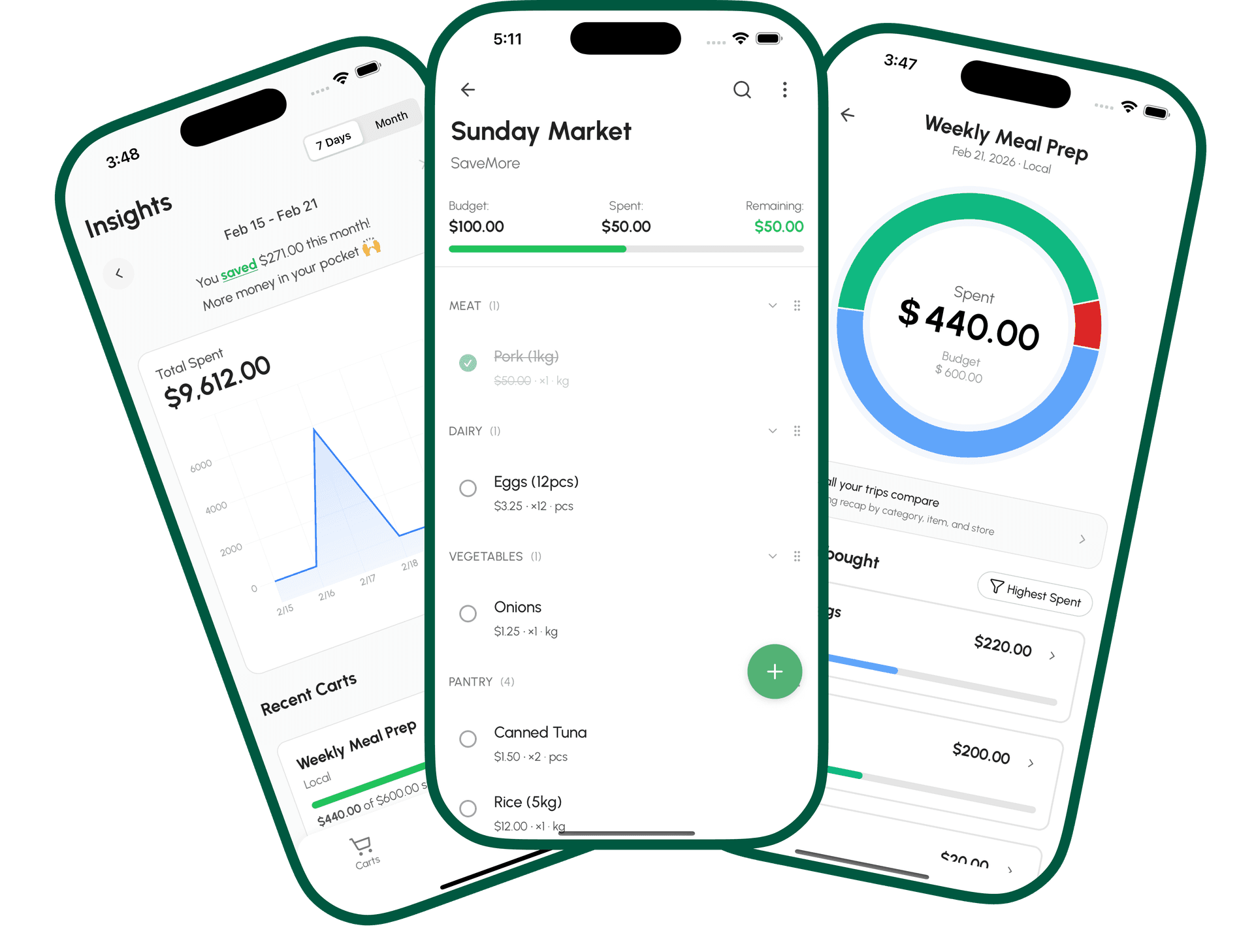
You set a budget before you leave. As you add items, the app tracks your running total in real time and shows a budget bar so you can see at a glance how much room you have left. When you're approaching your limit, it's visible — you don't have to calculate it yourself.
Price memory works across trips: once you've bought something, the app remembers what you paid. On your next trip, prices are pre-filled. You only need to update them when prices change.
Smart Add handles fast entry: say the item name and price out loud, or point your camera at a shelf price tag. Voice runs on-device and works offline; camera scanning reads the label with AI on a server, so it needs a connection.
Put this advice to work on your next grocery trip
Plan your list, set a budget, and track the total while you shop.
Explore GroceryBudget features →Calculator vs. Tracker: The Key Difference
A grocery calculator does arithmetic. You enter numbers, it adds them up.
A grocery budget tracker does arithmetic too — but it also remembers past prices, flags when you're going over, and builds a history of what you spend at each store over time. That history is what tells you whether Store A or Store B is actually cheaper for your regular items.
The difference matters when you're standing in the cereal aisle deciding between two boxes. A calculator needs you to look up both prices and do the math. A tracker already knows what you paid last time at each store and can surface that comparison automatically.
What About Spreadsheets?
Google Sheets or Excel can do everything a grocery calculator does — if you build it right. But there are two problems:
- In-store friction. Typing in a spreadsheet on a phone while pushing a cart is awkward. Cell interfaces are not designed for quick data entry in motion.
- Maintenance. Every time a price changes, you update it manually. Every time you shop at a different store, you manage the columns. Most people maintain their spreadsheet for a month and then stop.
Spreadsheets work well as an after-the-fact review tool. They work poorly as a real-time in-store tool.
Getting Started
GroceryBudget is free to start — no account required, works offline on the first launch.
- Create a cart and set your budget for the trip
- Add your usual items (voice or camera make this fast)
- Prices are saved and pre-filled on your next trip
Most people recoup the time investment within two or three trips once price memory kicks in.
Download GroceryBudget — free, offline, no account needed.