Grocery Budget App vs. List Apps: The Difference
Grocery list apps help you remember what to buy. Budget apps help you control what you spend. Here's why the distinction matters.
Key Takeaways
• List apps prevent forgetting items; budget apps prevent overspending — they solve different problems and shouldn't be confused.
• With a list app, you learn what you spent at the register; with a budget app, you control it during the trip.
• A list app is enough if you consistently stay within budget — a budget app is needed if checkout totals still surprise you.
Compare stores using your own grocery history
Remember the prices you paid and see which store is cheaper for the items you buy.
See price history and store comparison →

If you search "grocery app" on the App Store, you'll find hundreds of results. Most of them do the same thing: help you make a list of items to buy. That's useful — but it doesn't solve the #1 problem most shoppers face: spending more than they planned.
Grocery list apps and grocery budget apps look similar on the surface, but they solve fundamentally different problems.
What grocery list apps do well
List apps are designed for organization. The best ones offer:
- Shared lists so your household can add items in real time
- Categorization by aisle or department
- Recipe integration that auto-generates shopping lists
- Recurring items you buy every week
- Simple check-off as you shop
Popular options include AnyList, OurGroceries, and Reminders. They're good at making sure you don't forget the eggs.
What grocery list apps don't do
Here's the gap: none of these apps tell you how much you're spending. You could have a perfectly organized list and still walk out $40 over budget.
List apps don't:
- Track the price of each item
- Show a running total while you shop
- Warn you when you're approaching your budget
- Remember what things cost from trip to trip
- Show you spending trends over weeks or months
- Help you compare prices between stores
The list is the easy part. The budget is the hard part.
What a grocery budget app does differently
A budget app starts with a number: how much do you want to spend on this trip? Everything else flows from that constraint.
Here's the core difference in workflow:
List app workflow
- Add items to your list
- Go to the store
- Check off items as you buy them
- Find out the total at the register
- Hope it's not too bad
Budget app workflow
- Set a budget for this trip
- Add items with prices as you shop
- See your running total update in real time
- Get warned when you're close to your limit
- Make informed trade-offs before checkout
- Review your spending patterns over time
The difference is when you get the information. With a list app, you find out what you spent after the fact. With a budget app, you control what you spend in the moment.
Compare stores using your own grocery history
Remember the prices you paid and see which store is cheaper for the items you buy.
See price history and store comparison →When a list app is enough
To be fair, not everyone needs a budget app. A list app is probably fine if:
- You don't have a specific grocery budget
- Your household income comfortably covers grocery spending
- You mainly want to avoid forgetting items
- You shop for a small household with predictable needs
There's nothing wrong with using a list app if spending isn't your main concern.
When you need a budget app
A budget app becomes essential when:
- You consistently spend more than you planned
- You want to set a specific budget per trip or per week
- You want to see where your grocery money actually goes
- You shop at multiple stores and want to compare prices
- You're trying to reduce household expenses
- You want data, not guesses, about your grocery spending
If you've ever stood at the register thinking "how did it get this high?" — that's the moment a budget app would have helped.
Can you use both?
Some people use a list app to plan what to buy, then a budget app to track what they spend. That works, but it's two apps for one shopping trip.
The better solution is an app that handles both — a shopping list that also tracks prices and budgets. That way you're not switching between apps mid-aisle.
What makes GroceryBudget different
GroceryBudget combines both sides:
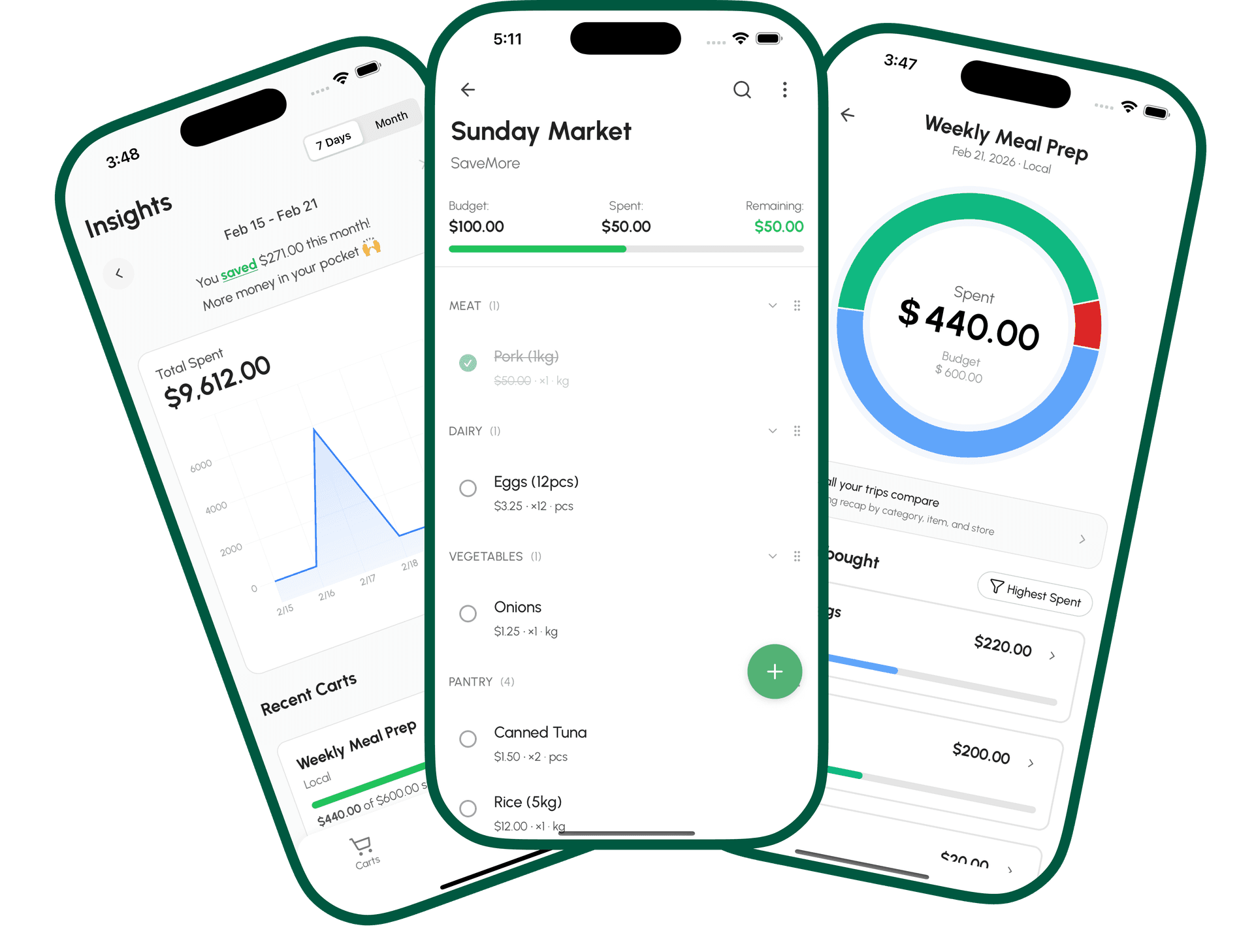
- Cart-based tracking: Each shopping trip is a cart with a store, budget, and list of items
- Real-time budget bar: See your running total against your budget as you add items
- Price memory: The app remembers what items cost, so adding them next time takes one tap
- Templates: Save your regular shopping list and reuse it each week
- Spending insights: See your spending by week, month, store, or category
- Offline-first: Works without internet because grocery store Wi-Fi is unreliable
- No account required: Start using it immediately, no signup friction
It's not a list app that added budgeting as an afterthought. The budget is the foundation.
The bottom line
Grocery list apps answer "what should I buy?" Grocery budget apps answer "how much am I spending?" If you only care about the first question, a list app is fine. If you care about both — and especially if you want to spend less — you need something that tracks prices and budgets in real time.
The best grocery app is the one that gives you control before you reach the checkout line, not a surprise after.