Why You Overspend on Groceries (And How to Actually Stop)
You make a list, you check prices, and you still go over at checkout. It isn't discipline — it's having no running total while you shop. Here's the fix.
Key Takeaways
• Quick stops — not your planned weekly shop — often account for 30%+ of grocery spending, but most people mentally write them off.
• Price changes are invisible without tracking: staples can rise 30-50% before most shoppers notice.
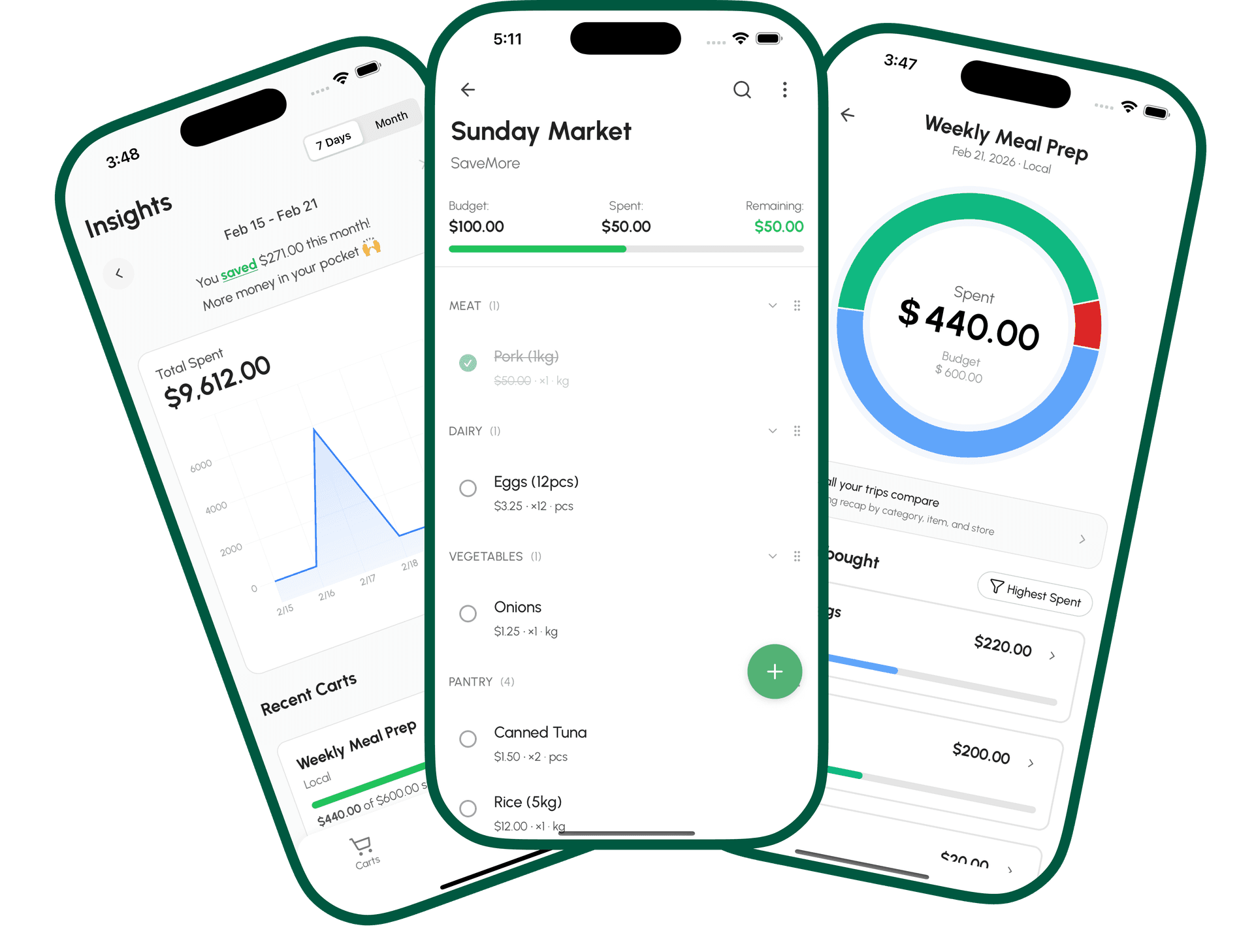
• A budget only works if you can see a running total while shopping — not written on a sticky note, but updating in real time.
Put this advice to work on your next grocery trip
Plan your list, set a budget, and track the total while you shop.
Explore GroceryBudget features →

You made a list. You had a number in your head. You still spent more than you planned.
This happens to almost everyone, and "just make a list" doesn't fix it. The problem isn't that you forgot to plan — it's that grocery spending has blind spots that lists alone can't solve.
Here's what's actually going on and what to do about it.
You Don't Know What You Spent Last Time
Ask yourself: how much did you spend on groceries last week? Not roughly — exactly. Most people can't answer that. And if you can't remember last week, you definitely can't spot a trend over the last month.
Without a baseline, every trip feels like a guess. You set a mental budget of "around $150" but you have no idea if that's realistic based on what you actually buy.
The fix: Track your spending for at least a few weeks. Not in a spreadsheet you'll abandon — somewhere you can check in 5 seconds while you're in the store. Once you see real numbers, you stop guessing and start making decisions based on what's actually happening.
You Don't Notice Price Changes
Eggs were $2.50 last month. Now they're $3.80. Did you notice? Probably not — you just grabbed them.
Prices shift constantly, and stores don't announce when something gets more expensive. Over a month, a bunch of small increases add up to a meaningfully higher bill. You're buying the same things but spending more, and nothing in your routine flags it.
The fix: Pay attention to the items you buy every single week. You don't need to track everything — just the 10-15 staples that make up most of your spending. If you notice eggs went up 50% at your usual store, you can check if the store across town still has them cheaper. Most people never make that comparison because they never see the data.
You're Loyal to One Store When You Shouldn't Be
Shopping at one store is convenient. But convenience has a cost. Store A might be cheaper for produce while Store B has better prices on pantry staples. If you do everything at Store A, you're overpaying on half your cart without realizing it.
This doesn't mean you need to visit five stores every week. Even splitting between two — one for fresh, one for staples — can make a noticeable difference.
The fix: Next time you shop, pay attention to the prices of your top 5 most-purchased items. Then check those same items at a different store. You'll probably find at least 2-3 items where the price gap is worth the trip. Over a month, that adds up.
You Buy the Same Things Without Questioning Them
Open your fridge right now. Is there something you bought last week that you didn't finish? A condiment you've replaced three times this year? A "healthy" item that sits there until it expires?
Habitual buying is invisible spending. You add the same items to your cart because you always have, not because you actually need them this week.
The fix: Before your next trip, look at what you already have. Check the fridge, the pantry, the freezer. Cross off anything you don't actually need to replace. This sounds obvious, but most people skip it because they're building their list from memory instead of from their kitchen.
Put this advice to work on your next grocery trip
Plan your list, set a budget, and track the total while you shop.
Explore GroceryBudget features →You Don't Set a Budget (Or You Set One You Ignore)
A budget only works if you can see it while you shop. Writing "$120" on a sticky note and putting it in your pocket doesn't count. By the time you get to checkout, you've already lost track.
The gap between "I have a budget" and "I'm actively watching my budget" is where overspending lives.
The fix: Whatever method you use — app, calculator, pen and paper — make sure you can see a running total as you add items to your physical cart. Real-time tracking is the difference between a budget that works and a budget that's just a number you wrote down.
You Shop Hungry (Yes, This Actually Matters)
This one sounds like a cliche from a magazine article. But there's real research behind it: a 2013 study from Cornell found that hungry shoppers buy 18.6% more items than people who ate before shopping. And they skew toward higher-calorie, more expensive items.
The fix: Eat something before you go. It takes 10 minutes and saves you from the "I'll just grab this too" impulse that adds $15-20 to every trip.
You Don't Review After the Trip
The receipt goes in the bag. The bag goes in the trash. You never look at what you actually spent — you just move on until the next trip.
Without a review, you can't learn from your spending. You can't see that you spent $40 on snacks, or that your produce budget doubled because you bought pre-cut vegetables instead of whole ones.
The fix: Spend 60 seconds after each trip reviewing what you bought and what it cost. Not a detailed analysis — just a quick scan. "I spent $135, most of it went to meat and dairy, I was $15 over budget." That's enough to inform your next trip.
The Pattern Behind All of This
Every overspending habit on this list has the same root cause: you don't have visibility into your own grocery spending. Not last week's, not last month's, not across different stores.
Lists help you remember what to buy. Budgets help you set a limit. But neither one helps you understand your spending patterns over time.
That's what tracking does. Not calorie tracking, not coupon clipping — just knowing what you spent, where you spent it, and how it compares to last time. The awareness alone changes behavior.
You don't need a complicated system. You need something you'll actually use every trip, that takes less effort than checking your phone. Start tracking your next grocery run and you'll see exactly where the money goes.