Best Grocery Budget Apps 2026: 10 Tested (1 Is Free)
We tested 10 grocery apps — most just make lists. These are the ones that actually show you when you're over budget before you hit checkout. One is free.
Key Takeaways
• What separates budget apps from list apps.
• Which app works best for different shopping styles.
• Why most grocery apps ignore the one thing that matters — your spending.
Track your grocery spending as you shop
Free to use. Works offline, no account needed.


Search for "grocery app" on any app store and you'll find dozens of results. Almost all of them do the same thing: help you build a shopping list. Lists are useful. But a list doesn't tell you that you're $35 over budget before you reach the register.
Most grocery apps are list apps wearing a grocery hat. Very few actually track what you spend. This roundup focuses on the budget side — apps that help you control your spending, not just organize your items. We tested each one for real grocery trips and evaluated them on what matters: can this app actually help you spend less?
Here's what we found.
1. GroceryBudget
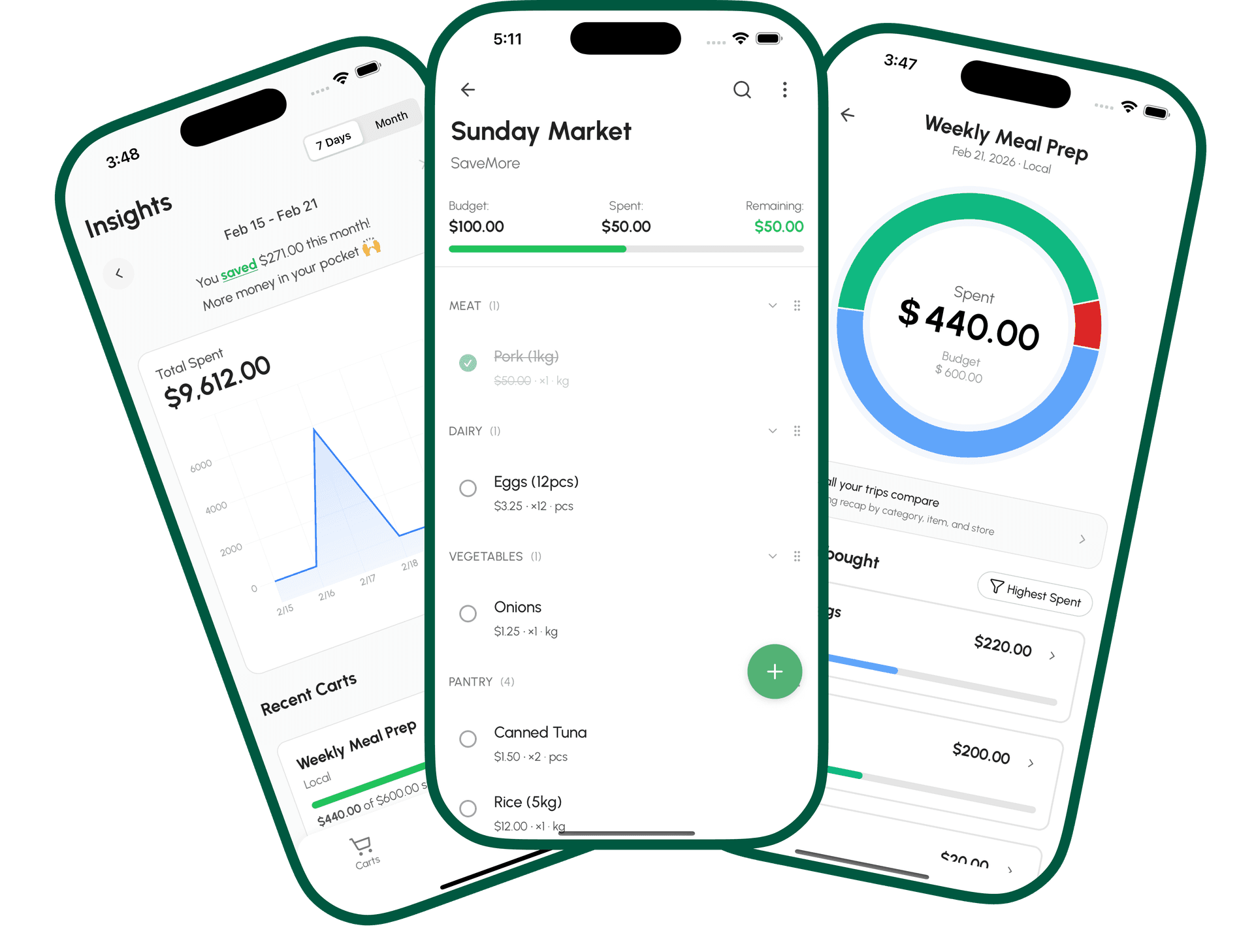
What it does: GroceryBudget is a dedicated grocery budget tracker for iOS and Android. You create a cart, set a budget, and add items as you shop. Your running total updates in real time, and a budget bar shows exactly how close you are to your limit. Smart Add lets you add items by voice or camera — say "2 lbs chicken breast $4.99" (voice runs on-device and works offline) or point at a label for AI scanning (needs a connection). It remembers prices from previous trips (price memory), compares spending across stores, and supports cart templates for recurring shops. Family Sharing lets multiple household members contribute to the same cart.
Best for: People who want to know what they're spending while they shop, not after. If your problem is walking out of the store over budget every week, this is built specifically for that.
Pricing: Free tier is generous — unlimited carts, full budget tracking, price memory, and offline support. Premium is $9.99/month, $29.99/year, or $79.99 for lifetime access. See what changes after you upgrade if you're on the fence.
Platform: iOS, Android
The catch: It doesn't do meal planning or recipes. If you need recipe integration, this won't work for you. But for the specific problem of tracking grocery spending in real time, nothing else we tested comes close.
2. YNAB (You Need a Budget)
What it does: YNAB is a full personal finance app built around the envelope budgeting method. You allocate every dollar to a category — groceries included — and it syncs with your bank accounts to track transactions. It's powerful for whole-life budgeting across rent, utilities, savings, and groceries.
Best for: People who want a single app to manage their entire financial life. If you're looking for a system that handles groceries as one piece of a larger budget picture, YNAB is the gold standard.
Pricing: $14.99/month or $109/year. There's a 34-day free trial, but no permanent free tier.
Platform: iOS, Android, Web
The catch: YNAB doesn't have a shopping list, and it's not designed for in-store use. You won't see a running total while you shop — you'll see your grocery category balance, but that's a monthly number, not a per-trip number. The learning curve is steep, the price is high relative to grocery-only apps, and it requires linking your bank accounts. If your only problem is grocery overspending, this is using a chainsaw to trim a hedge.
3. Listonic
What it does: Listonic is a clean, well-designed shared grocery list app. You can create lists, share them with family members in real time, and import items from recipes. The interface is straightforward, and it handles the basics of list management well.
Best for: Couples or families who want a simple shared list without a lot of setup. If you just need your partner to see what's on the list and check things off, Listonic does that with minimal friction.
Pricing: Free with ads. Premium removes ads for $2.49/month.
Platform: iOS, Android, Web
The catch: No budget tracking at all. No prices, no totals, no spending history. It's purely a list app. You'll know what to buy but have zero visibility into what you're spending. If budget control is your goal, Listonic doesn't even attempt to address it.
4. AnyList
What it does: AnyList combines recipe management with grocery lists. You can save recipes, plan meals for the week, and automatically generate shopping lists from your meal plan. It syncs across devices and organizes items by store aisle.
Best for: Home cooks who want recipes and lists in one place. If you plan meals every week and want your shopping list to flow directly from your recipes, AnyList handles that workflow smoothly.
Pricing: Free for basic use. AnyList Complete is $12.99/year.
Platform: iOS, Android, Web
The catch: Zero budget or spending features. No prices, no totals, no budget limits. AnyList is focused entirely on what you're cooking and what you need to buy — it has nothing to say about how much any of it costs. If you're using AnyList and still overspending, the app literally can't help with that part.
5. Bring!
What it does: Bring! uses a visual, icon-based interface for shared grocery lists. Items appear as illustrated tiles rather than text rows, which makes it easy to scan quickly. It supports smartwatch integration, loyalty card storage, and real-time sharing with household members.
Best for: Families who want a visual, low-friction shared list. The icon-based design works well for quick recognition, and the smartwatch support is useful for glancing at your list without pulling out your phone.
Pricing: Free with ads. Premium is $2.99/month.
Platform: iOS, Android, Web, Wear OS
The catch: No budget tracking. No price entry. No spending visibility of any kind. Bring! is a list app with a strong visual design, but it's still just a list app. You also get limited customization — if an item doesn't have a pre-made icon, you're working with a generic tile.
Stop guessing what your groceries cost
Free to use. Works offline, no account needed.
6. Spreadsheets (Google Sheets / Excel)
What it does: A spreadsheet can do anything you want — track prices, calculate running totals, compare stores, chart spending over time. If you're willing to build it, you can create a grocery budget tracker that works exactly the way you think.
Best for: People who love building their own systems and don't mind maintaining them. If you enjoy the process of setting up formulas and tweaking layouts, a spreadsheet gives you total control.
Pricing: Free (Google Sheets) or included with Microsoft 365.
Platform: Anything with a browser or Office installed.
The catch: Using a spreadsheet on your phone in a grocery store is painful. Tiny cells, easy-to-break formulas, no real-time budget alerts, and every price entry is manual with no memory or automation. It works great as a monthly review tool. It works poorly as an in-store shopping companion. Most people who start with spreadsheets eventually abandon them because the friction is too high for every single trip.
7. Goodbudget
What it does: Goodbudget is a digital envelope budgeting app — you divide your income into spending envelopes (groceries, rent, entertainment, etc.) and track expenses against each one. It's similar to YNAB in philosophy but simpler and cheaper. You can share envelopes with a partner so you're both tracking against the same grocery budget.
Best for: Couples or households who want to budget together using the envelope method without paying YNAB prices. If you want to assign a fixed monthly amount to groceries and both people to track against it, Goodbudget works cleanly.
Pricing: Free tier (10 envelopes, 1 device). Plus is $10/month or $80/year.
Platform: iOS, Android, Web
The catch: Like YNAB, Goodbudget tracks your overall grocery category — not your per-trip spending. You won't see a running total while you shop. It's a monthly budgeting tool, not an in-store tracker. It also requires manual expense entry unless you connect accounts on the paid plan.
8. OurGroceries
What it does: OurGroceries is a household-sharing grocery list app. Lists sync instantly across every device in your household, and you can organize items by store aisle, create recurring lists, and add items from recipes. It's been around for years and has a reputation for reliability.
Best for: Families with multiple shoppers who need a simple, rock-solid shared list. If reliability and quick list-sharing are the priority, OurGroceries delivers that without a lot of complexity.
Pricing: Free with some limits. Premium is $7.99/year — one of the cheapest paid tiers in the category.
Platform: iOS, Android, Web, Alexa
The catch: No budget or price tracking at all. It's purely a list and recipe app. No running total, no budget alerts, no spending history. If you want to know what you're spending, you'll need a separate tool.
9. Mealime
What it does: Mealime is a meal planning app that generates grocery lists from your weekly meal plan. You pick recipes, it automatically builds a shopping list, and eliminates duplicate ingredients across meals. The focus is on streamlining the cooking-to-shopping workflow.
Best for: People who want to reduce grocery waste and plan meals before they shop. If your problem is buying too much of the wrong things because you don't know what you're cooking, Mealime solves that upstream problem.
Pricing: Free with limited recipes. Pro is $5.99/month or $39.99/year.
Platform: iOS, Android
The catch: Zero budget functionality. Mealime doesn't care about prices — it cares about what you're eating. If your goal is spending less, this won't help with the actual dollar amount, only with potentially buying fewer impulse items you didn't plan for.
10. Flipp
What it does: Flipp aggregates grocery store flyers and weekly deals in one app. You browse circulars from your local stores, clip coupons, and find the best prices on items before you shop. It covers most major US chains and lets you create a shopping list from deals you find.
Best for: Deal-focused shoppers who plan around what's on sale rather than what they need. If you build your weekly meals around whatever proteins or produce are discounted, Flipp is the most efficient way to find that information.
Pricing: Free.
Platform: iOS, Android
The catch: Flipp is a deal-finding app, not a budget tracker. It won't tell you your total while you shop or warn you when you're over budget. And it's US-focused — limited usefulness in other markets. It's most valuable as a pre-trip planning tool, not an in-store companion.
How to Choose
The right app depends on the problem you're actually trying to solve:
- Need to track your budget while you shop? GroceryBudget is the only app here built around real-time spending visibility during a grocery trip. If you're on iPhone specifically, see our best grocery budget app for iPhone breakdown.
- Shopping as a couple? See our guide on grocery budgeting for couples — shared visibility is what makes it work, not shared responsibility.
- Need whole-life budgeting across all spending categories? YNAB or Goodbudget handle groceries as part of your entire financial picture — YNAB is more powerful, Goodbudget is cheaper and simpler. Full comparison: YNAB vs GroceryBudget.
- Just need a shared shopping list? Listonic, Bring!, or OurGroceries all handle shared lists well — Listonic is cleanest, Bring! is most visual, OurGroceries is most reliable.
- Want recipes and lists in one app? AnyList or Mealime — AnyList is more flexible, Mealime is more streamlined.
- Shopping for deals before you go? Flipp is the best deal aggregator for US stores.
- Love building your own system? Google Sheets gives you unlimited flexibility if you're willing to maintain it.
The Bigger Picture
Most people who overspend on groceries don't have a list problem — they have a visibility problem. They don't know what they're spending until they see the receipt. The apps you choose should address the specific gap you're dealing with.
If that gap is "I don't know my total until checkout," the answer is a real-time budget tracker. If it's "I forget what to buy," a list app is fine. If it's "I need to manage all my money," a full budgeting tool makes sense.
Just don't expect a list app to solve a budget problem. They're different tools for different jobs.
Frequently Asked Questions
What is the best grocery budget app in 2026?+
For tracking spending in real time while you shop, GroceryBudget is purpose-built and has a generous free tier. YNAB is best for whole-life budgeting and Listonic for simple shared lists — but most apps are list apps that don't track spending.
What is the difference between a grocery budget app and a grocery list app?+
A list app helps you remember what to buy; a budget app tracks what you spend and warns you before you go over. Most apps only do the list part.
Is there a free grocery budget app?+
Yes — GroceryBudget's free tier includes real-time budget tracking, price memory, and offline use with no account required.