Palengke vs Supermarket: Which Is Actually Cheaper?
We compared prices item by item: produce, meat, pantry staples. Palengke wins some, supermarket wins others — here's when to use each.
Key Takeaways
• Where palengke genuinely wins on price and where it doesn't.
• The hidden costs of palengke that most comparisons ignore.
• How Filipino families can get the best of both without overspending.
Compare stores using your own grocery history
Remember the prices you paid and see which store is cheaper for the items you buy.
See price history and store comparison →

Walk into any conversation about grocery budgeting in the Philippines and someone will say it: "Mag-palengke ka na lang." The assumption is that wet markets are always cheaper than supermarkets, full stop.
The reality is more nuanced — and getting it wrong in either direction costs money.
Where Palengke Wins on Price
Palengke genuinely has the price advantage in several categories:
Fresh fish and seafood. This is where the gap is most significant. Fish bought directly from a vendor at the palengke is typically 30–50% cheaper per kilo than the same species at an SM or Robinsons fish section. Bangus, tilapia, galunggong — all consistently cheaper at the wet market.
Vegetables and produce. Especially for less-processed items: kangkong, pechay, sitaw, ampalaya, kamatis. You're buying direct from or close to the source. Expect to pay 20–40% less than supermarket prices for the same day's produce.
Pork and beef. Wet market meat vendors typically undercut supermarket butcher sections by ₱30–₱80/kg depending on the cut. Liempo, pork belly, beef for nilaga — all cheaper at the wet market if you're buying that day.
Bulk dry goods from suki stores. Rice, mongo, dried fish, vinegar, soy sauce in bulk from a suki who knows you often beats packaged supermarket pricing.
Where Supermarket Wins
Processed and packaged goods. Lucky Me, Argentina corned beef, Century Tuna, Bear Brand — these are nationally price-regulated or price-stable goods. There's little difference between palengke-adjacent sari-sari stores and supermarkets for these, but supermarkets frequently run promos (3 for 2, buy 2 get 1) that bring the per-unit cost below what you'd find at a small stall.
Hygiene and cleaning products. Detergent, shampoo, dishwashing liquid — the supermarket nearly always wins here.
Shelf-stable pantry items in quantity. Bulk-buying cooking oil, flour, or sugar during a supermarket sale often beats palengke.
Convenience and food safety standards. For families concerned about refrigeration standards, handling, and labeling, supermarkets have stronger consistency. This isn't a knock on wet markets — it's just a practical consideration for perishable proteins.
The Hidden Costs of Palengke
Most "palengke is cheaper" calculations miss several real costs:
Transportation. If the palengke is a 30-minute tricycle or jeepney ride away, add that cost. For a family spending ₱1,500 at the wet market and saving ₱300 over the supermarket, a ₱100 roundtrip cuts your savings by a third.
Time. Wet market shopping is slower — haggling, navigating stalls, waiting for orders to be packed. For working families, that time has a cost too.
Spoilage and waste. Palengke produce is often sold in larger quantities with no refrigeration guarantees. Buying a big bundle of kangkong because that's how it's sold, then wasting half of it, erases the price advantage.
No loyalty pricing or loyalty points. Supermarket membership cards and apps accumulate points that translate to real discounts over time. Wet market transactions are cash-only with no accrual benefit.
Compare stores using your own grocery history
Remember the prices you paid and see which store is cheaper for the items you buy.
See price history and store comparison →A Practical Split Budget Strategy
Most Filipino family budgets do best with a hybrid approach:
Buy at palengke:
- Fish, seafood, shellfish
- Fresh vegetables for the week
- Pork and beef for specific meals
Buy at supermarket:
- Processed and packaged goods
- Cleaning and hygiene products
- Dairy and eggs (often better handled and date-stamped)
- Anything on a genuine promotional deal
Shop palengke weekly, supermarket semi-monthly. This rhythm captures the freshness advantage of wet markets while consolidating bulk buys and sale items at the supermarket.
What Does This Look Like in a Budget?
For a Filipino family of four targeting a ₱6,000–₱8,000/month grocery budget:
- Palengke (weekly, 4x/month): ₱800–₱1,200 per trip on fish, vegetables, fresh meat → ₱3,200–₱4,800/month
- Supermarket (2x/month): ₱900–₱1,500 per trip on dry goods, packaged items, cleaning products → ₱1,800–₱3,000/month
- Total: ₱5,000–₱7,800/month — achievable on a tight budget without cutting nutrition
Tracking Both in One Place
The challenge with split shopping is that your spending is spread across two places. You might think you're under budget because your palengke trips feel small, not realizing the supermarket trips are adding up.
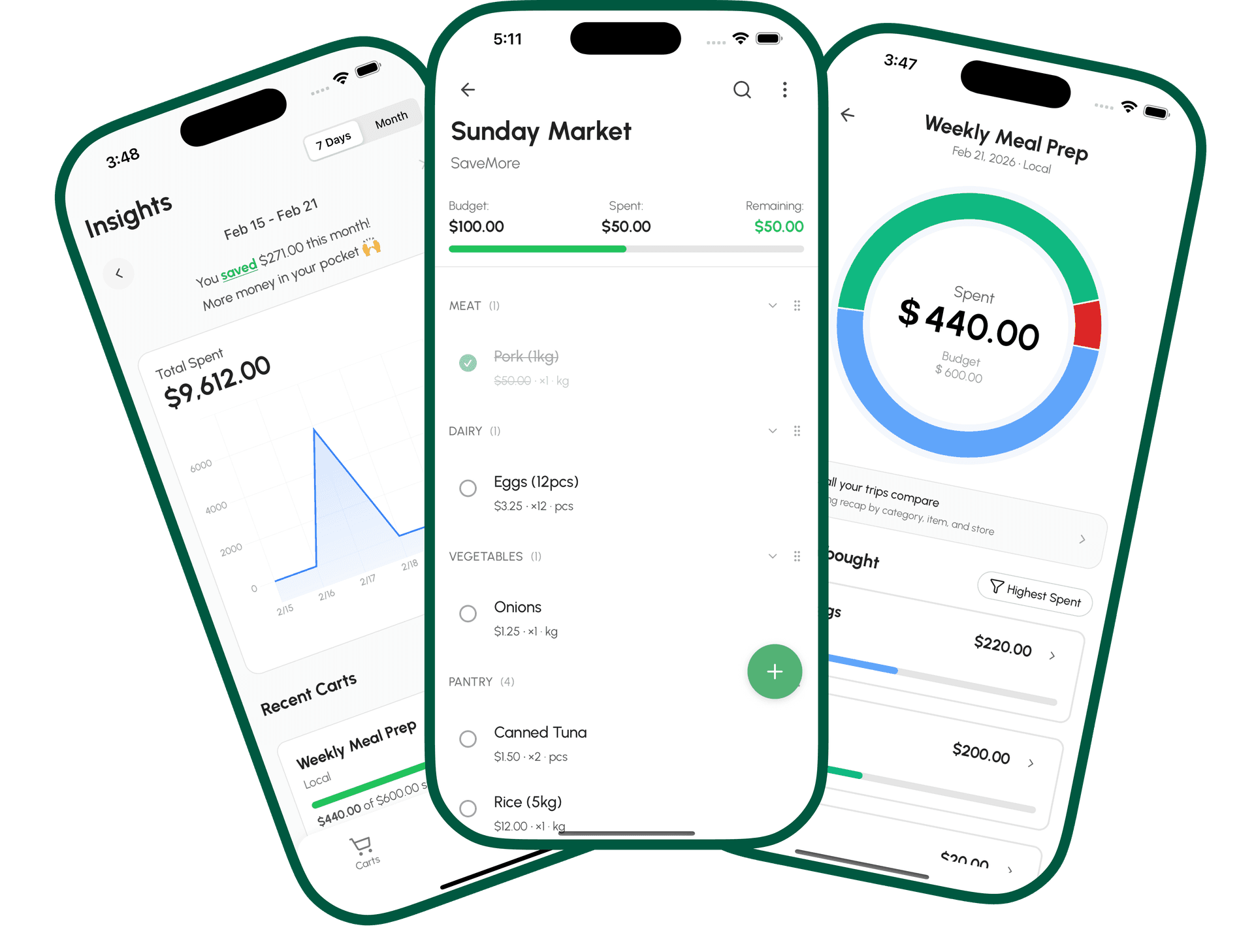
GroceryBudget lets you create separate carts for palengke and supermarket trips and set a combined monthly budget. Price memory works for both — even informal item entries from wet market purchases. At the end of the month, you can see total spend across all trips.
The app works offline and supports Philippine peso. Free to start, no account required.
Download GroceryBudget — track palengke and supermarket spending in one place.
---
Also useful: Puregold vs Save More: Which Is Cheaper? — price comparison for the two main budget supermarket chains. And Monthly Grocery Budget for One Person in the Philippines — realistic benchmarks for solo shoppers.
Frequently Asked Questions
Is the palengke cheaper than the supermarket?+
For fresh goods — fish, meat, and vegetables — the palengke usually beats the supermarket by ₱30–₱80 per kilo. Supermarkets win on packaged and branded dry goods.
How do Filipino families save by combining both?+
Buying fresh produce and meat at the palengke and dry or packaged goods at the supermarket lets a family of four hit a ₱5,000–₱7,800 monthly budget without cutting nutrition.
What should I buy at the palengke versus the supermarket?+
Palengke: fish, meat, vegetables, and fruit. Supermarket: rice, oil, canned goods, condiments, and cleaning or household items.