The Real Cost of Using a Free Grocery App
Free grocery apps aren't free — they make money somewhere. Here's how to read the business model before you hand over your shopping data.
Key Takeaways
• Ad-supported grocery apps optimize for engagement, not budgeting — and some sell your purchase history to third parties.
• Check the privacy policy for 'share with advertising partners' before trusting an app with a year of shopping data.
• A fair freemium model gives you real core functionality free and charges for depth — not for basic syncing or list limits.
Track your grocery spending as you shop
Free to use. Works offline, no account needed.


Every app that says "free" is making money somehow. That's not cynicism — it's just how software businesses work. Before you put your weekly grocery data into an app, it's worth understanding the tradeoff you're making.
How Free Apps Make Money
There are a few common business models. Each one comes with a different set of tradeoffs for the user.
Ads
The most straightforward model. You see ads, the app earns revenue. The problem is that ads in a shopping context are particularly disruptive. You're in the middle of an aisle, trying to log an item or check your total, and an ad banner or interstitial gets in the way.
Beyond the UX friction, ad-supported apps have an incentive structure that's misaligned with your goals. Their revenue comes from keeping you engaged with ads, not from helping you spend less on groceries. In some cases, especially grocery apps, those ads are placed by brands that want you to buy their products — which is the opposite of helping you budget.
Data collection and selling
Some apps collect detailed behavioral data — what you buy, how often, where you shop, what prices you pay — and sell it to third parties. This data is valuable to CPG brands, market research firms, and retailers who want to understand consumer behavior.
The grocery category is particularly sensitive here. Your weekly shopping basket reveals a lot: dietary habits, household size, health conditions, income level, and more. An app that monetizes your data is making money from information that feels personal.
Check the privacy policy before you trust an app with a year's worth of shopping history. Look specifically for language about "sharing with third-party partners" or "using data for advertising purposes."
Paywalling core features
The third model is a freemium tier that's deliberately crippled. The "free" version sounds complete in the description, but the moment you actually try to use it, the features you need are behind a paywall.
This varies a lot in how aggressively it's implemented. Some apps restrict to 1-2 lists on the free tier, or limit list items, or put basic features like syncing behind a paywall. In the worst cases, the free tier is effectively a demo — usable enough to get you hooked, not usable enough to solve your actual problem.
How to Read a Grocery App's Business Model
Before downloading, check these things:
Look for an explicit pricing page. Apps with clear, honest pricing (here's what's free, here's what's paid, here's why) are usually less extractive than apps that bury the distinction.
Check the privacy policy for data sharing language. Phrases like "share with advertising partners," "third-party analytics," or "behavioral data" indicate the app may monetize your data.
Read reviews from long-term users. Free-to-download apps with aggressive monetization often show up in reviews — "works fine but covers the screen in ads" or "had to pay to see my own history."
Check if the free tier has limits that matter. A limit of 3 lists doesn't sound bad until you realize you run multiple shopping trips a week. A 7-day history limit doesn't sound bad until you want to look at last month's spending.
Stop guessing what your groceries cost
Free to use. Works offline, no account needed.
What a Genuinely Free Core Should Include
There's a reasonable argument that core grocery tracking functionality should be free. Setting a budget, adding items, tracking your total — these are basic tools that make the app worth using at all.
Where it's fair to charge: deeper analytics, long-term history, advanced features like store comparison or price trend tracking, and conveniences like faster input methods.
Where it's not fair: charging for basic syncing, imposing severe list limits, running ads that interrupt the shopping workflow, or selling purchase history to third parties.
GroceryBudget's Model
GroceryBudget is free to use without a signup — open the app, create a cart, start tracking. No ads, ever. The business model is a straightforward premium subscription.
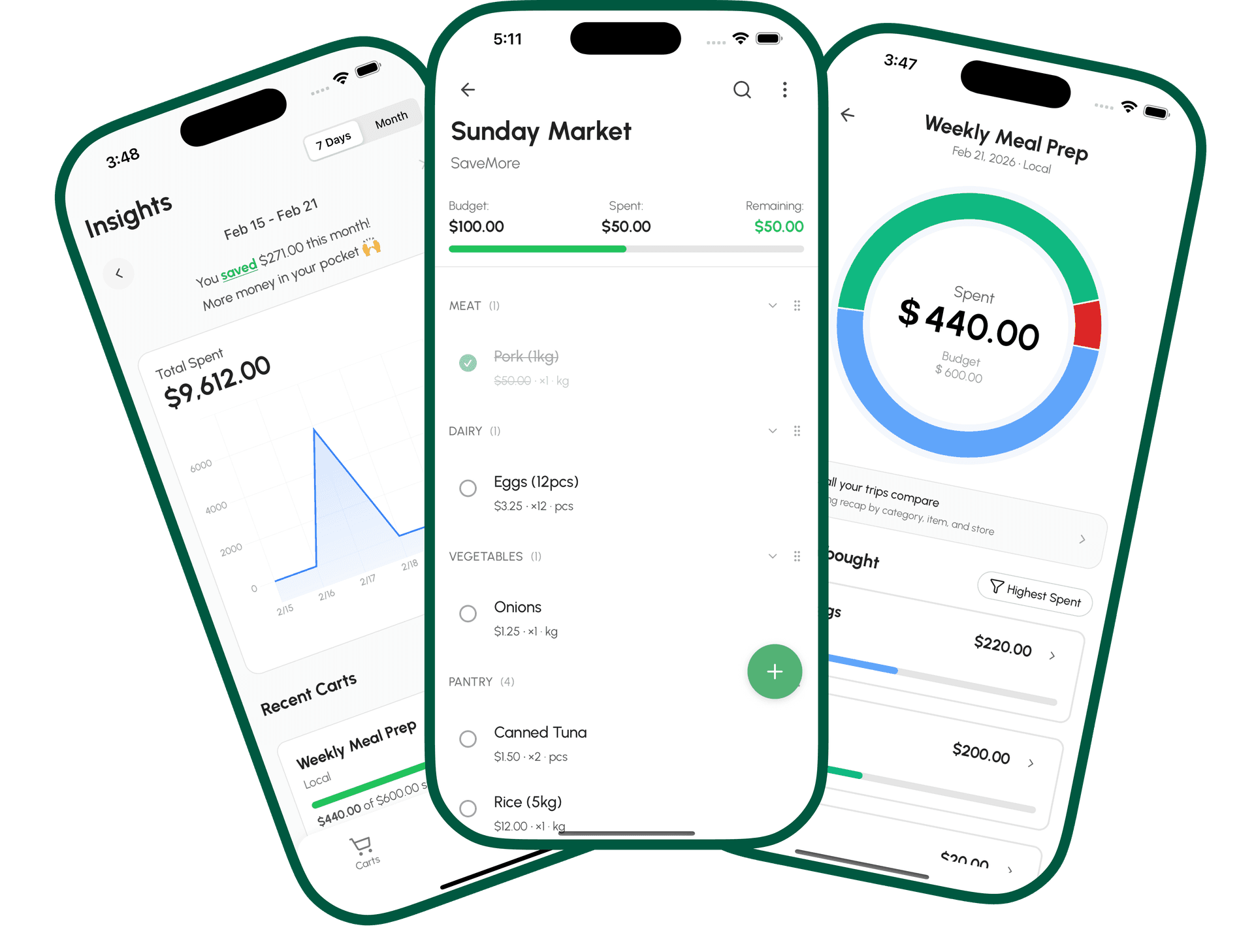
The free tier is designed to be genuinely useful: unlimited carts and items, real-time budget tracking, price memory, Smart Add voice dictation (unlimited — say the item, quantity, and price and it's added instantly), unlimited custom templates, 3 free AI label scans and 3 free receipt scans, 7-day insights history, CSV export, and full offline support. That covers most of what most shoppers need.
Premium adds features for people who want more depth: unlimited AI label and receipt scanning, recurring lists that rebuild themselves on schedule, full insights history (see spending over months, not just 7 days), the full most-purchased items list, and Family Sharing for up to 5 members. That's $9.99/mo, $29.99/yr, or $79.99 as a lifetime purchase.
The data you enter stays yours. It's used to power the app's features — price memory, insights, history — not sold to advertisers or third parties.
The Bottom Line
"Free" is a business model decision, not a charitable one. Understanding how an app makes money tells you a lot about whose interests it's optimized for.
An ad-supported grocery app optimizes for engagement and ad clicks. A data-selling app optimizes for volume of user data. A freemium app with a fair model optimizes for users who find value in the core and pay for more.
When you're putting months of shopping data into an app — what you buy, where you shop, what you spend — it's worth spending 10 minutes understanding the tradeoff before you start.