What Changes After You Upgrade to GroceryBudget Premium
GroceryBudget's free tier handles the basics. Here's what happens when you start hitting its limits — and why Premium makes the difference.
Key Takeaways
• The free tier is genuinely useful — carts, budgets, custom templates, item photos, the full most-purchased list, price history, and 7 days of insights are all free.
• Premium removes the one real cap left: spending history past 7 days, plus unlimited AI scanning and recurring lists.
• AI camera scanning (Premium, unlimited) reads item name, price, unit, and category automatically — no typing in the aisle.
Put this advice to work on your next grocery trip
Plan your list, set a budget, and track the total while you shop.
Explore GroceryBudget features →

GroceryBudget's free tier is genuinely useful. You can create carts, set budgets, track spending, build custom templates, and see 7 days of insights. Most people start there, and it works.
But after a few weeks of real use, patterns start to emerge. You hit walls you didn't expect. This isn't a feature checklist — it's what actually changes when your grocery tracking gets serious.
Week 1: Everything Works Fine
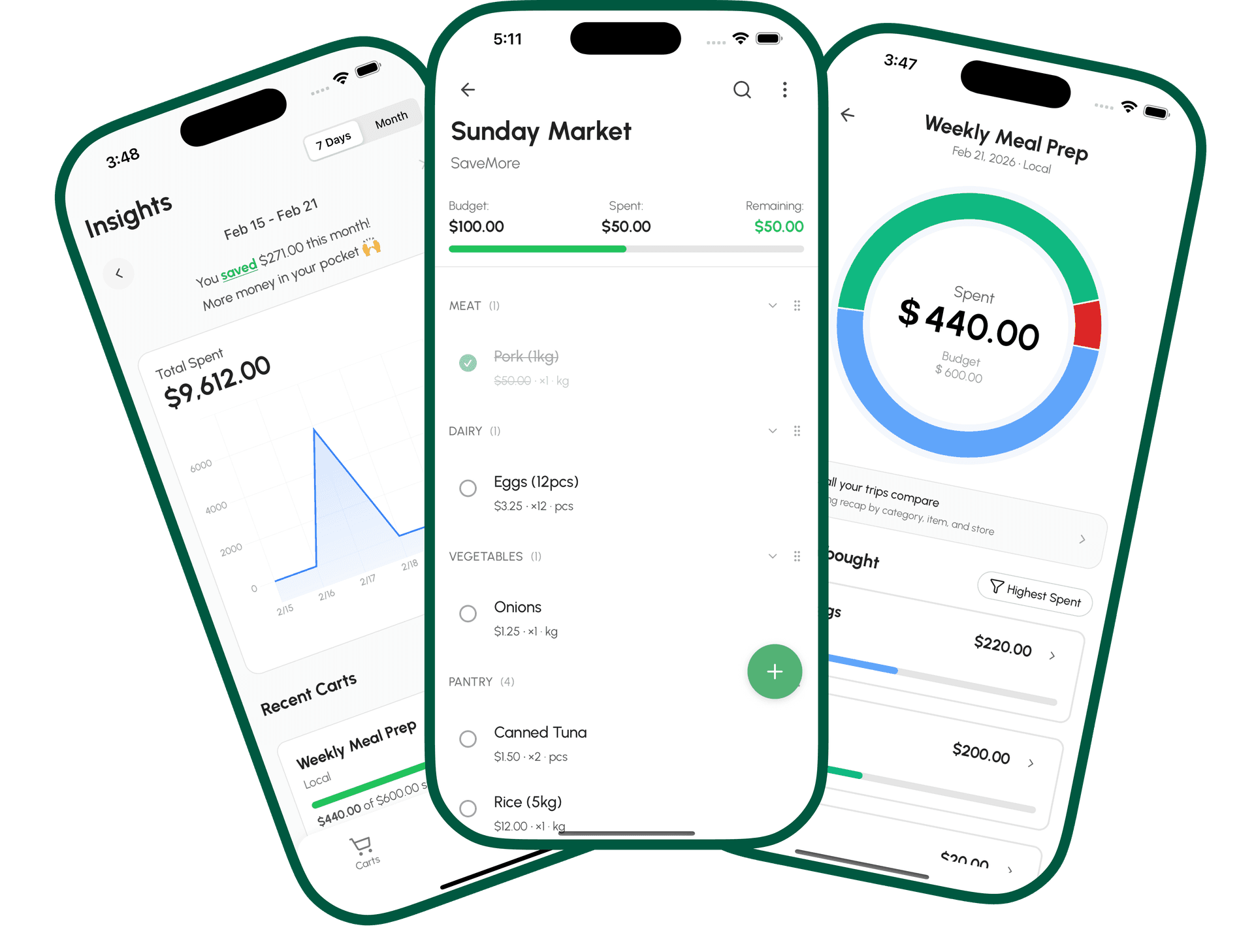
You download the app, create your first cart, add items, set a budget. You complete your trip and check the Insights tab. There's a spending chart, a category breakdown, your total spent. Price memory saves your prices for next time.
The free tier handles all of this. No limits, no restrictions. This is your trial run and it's the real app.
Week 2: You Want to See Last Week
You open Insights to compare this week's spending to last week. But last week's data is gone — free users see the last 7 days only.
You remember spending more last week. Or was it less? You're not sure. The spending trend chart shows a line that starts today and goes back seven days. Everything before that is a blank.
This is the first wall. You're tracking your spending, but you can't see the bigger picture.
With Premium: Your full spending history is always there. Every cart, every trip, every trend — going back to your first day using the app. The spending trend chart shows weeks and months of data, so you can spot patterns like "I spend more the week before holidays" or "my grocery costs went up 15% since January."
Week 3: Typing Every Price Gets Old
By week three you're in a rhythm — but entering each item by hand is the slow part. You're in the aisle holding a jar, hunting for the price field, tapping out "cooking oil" and the peso amount before moving on. Multiply that by a full cart and it adds up.
You can keep typing, and voice dictation (free and unlimited) speeds it up a lot. But the fastest path is to point your camera at the shelf label and let it do the work.
With Premium: AI camera scanning reads the item name, price, unit, and category straight off any grocery label — no barcode, no typing. The budget bar updates as each scanned item lands, so your running total stays in view while you shop. Scan as you drop things in the basket and your spending tracks itself in real time. See exactly how the scanner works.
Put this advice to work on your next grocery trip
Plan your list, set a budget, and track the total while you shop.
Explore GroceryBudget features →Month 2: You're Shopping at Multiple Stores
By now you have a routine. Maybe it's the supermarket for staples and the local market for produce. You've been entering prices at both stores for weeks.
You know eggs are cheaper at one store. You think rice is cheaper at the other. Good news: you don't need Premium to check. Price history, store comparison, and your full most-purchased items list are all free — open any item and see its price trend across every store you shop at, sorted by frequency, by total spent, or by store. This is where you find the items eating most of your budget.
What you're still missing this far back is the trend itself. The price chart only has 7 days of trip history to draw from — you can see today's prices clearly, but not whether they're rising over the month.
With Premium: Your full spending history is there — every trip, going back to your first day. The same price trends and store comparisons you already have, just with months of data behind them instead of a week.
The Compound Effect
None of these features matter on day one. On day one, the free tier is perfect.
But grocery budgeting is a long game. You're not trying to save money on one trip — you're trying to spend less over months and years. That requires data you can look back on, patterns you can spot, and workflows you can repeat without thinking.
Premium doesn't add new capabilities. It removes the limits on the ones you're already using — and adds one brand-new one:
- AI camera scanning: Point your camera at any label — AI reads the item, price, unit, and category. Premium only, unlimited scans.
- Insights history: 7 days → unlimited
- Recurring lists: set any cart to rebuild itself weekly or every 2–4 weeks
- Family Sharing: Share your Premium subscription with up to 5 family members
The free tier tells you what you spent this week. Premium tells you what you spend, where you spend it, how it's changing, and where you're overpaying.
What It Costs
Premium is available as a monthly ($9.99/mo), yearly ($29.99/yr), or lifetime ($79.99 one-time) plan. Prices vary by region and are shown in the app. If the app helps you avoid even one impulse buy per month, it pays for itself.
It works for guest accounts too — you don't need to register first. When you do create an account, your Premium status and all your data transfer automatically.
Try Free First
There's no pressure to upgrade. Use the free tier for as long as you want. Create carts, track budgets, build custom templates, build up your price memory. When you start wanting to see further back, scan instead of type, or compare prices across stores — Premium is there.
Download GroceryBudget and start with your first cart. You'll know when the free tier isn't enough.