What 73% of Americans Worry About (Groceries)
Nearly three-quarters of Americans are worried about affording groceries. Most aren't doing the one thing that actually helps.
Key Takeaways
• Why grocery anxiety is at an all-time high in 2026.
• The gap between worrying about prices and actually tracking them.
• How simple budget tracking reduces both spending and stress.
Track your grocery spending as you shop
Free to use. Works offline, no account needed.


Seventy-three percent of Americans — across every political affiliation, income bracket, and region — say they are worried about paying for groceries. That number comes from a CFR-Morning Consult survey, and it is not an outlier. The Food Industry Association found that 69% of consumers are "very or extremely concerned" about food inflation. Nearly 9 in 10 say they are frustrated with rising prices at the store.
These numbers are hard to wave away. Grocery anxiety is not a niche concern. It is the norm.
And yet most of the people experiencing it are doing exactly one thing about it: worrying.
The Numbers Behind the Feeling
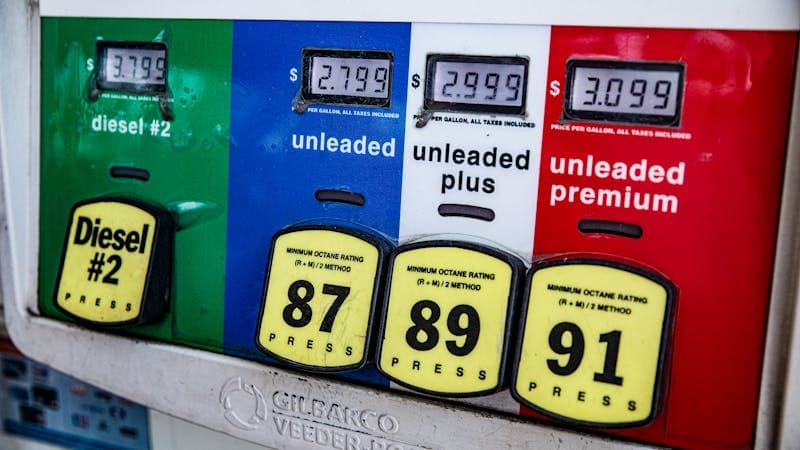
Grocery prices are up 2.4 to 3.1 percent year over year, depending on the category. That does not sound dramatic until you do the math across a full year of feeding a household. Tariffs on imported food products are adding an estimated $1,681 per year per household. Ongoing geopolitical instability — including conflict involving Iran — is pushing up diesel and fertilizer costs, which quietly raise the price of everything that gets shipped or grown.
None of this is in your control. You cannot negotiate the price of eggs. You cannot lobby your way to cheaper chicken. The macroeconomic forces pushing prices up are real, and they are not going away soon.
So the question becomes: what do you do with that reality?
Most people absorb it as a vague, persistent dread. They feel the squeeze at checkout. They notice the total is higher than it used to be. They have a general sense that things cost more. But they cannot tell you exactly how much more, or which items are responsible, or whether their own habits have changed alongside the prices.
That vagueness is the problem.
Why Vague Financial Stress Is Worse Than Specific Financial Stress
There is a well-documented psychological pattern here. Undefined financial anxiety is more damaging than knowing your exact situation — even when your exact situation is bad.
Think about it this way. "I feel like everything is more expensive and I don't know what to do" is a thought that loops. It has no resolution. It sits in the background while you shop, while you cook, while you eat. It makes every purchase feel like a small failure.
Now compare that to: "I spent $620 on groceries this month, up from $580 last month, mostly because meat prices rose 8% and I bought an extra round of snacks before the long weekend."
The second version is a higher number. But it is less stressful. Because it is specific, it is explainable, and it points toward something you can actually adjust. The anxiety dissolves into information. And information is something you can work with.
Stop guessing what your groceries cost
Free to use. Works offline, no account needed.
What Tracking Reveals That Worrying Never Will
When you track your grocery spending — even loosely — patterns show up that worry alone never surfaces.
Which categories are actually hitting you hardest. You might assume it is produce, but it turns out dairy and meat are where most of the inflation landed for your household. That changes what you prioritize.
Whether your increase is from prices or habits. Sometimes spending goes up because prices went up. Sometimes it goes up because you started buying more prepared foods, or added a few new items to the rotation, or shifted to a more expensive store. Without data, you cannot tell the difference. With data, it is obvious.
Where you have room to shift. Maybe you are spending $80 a month on beverages and did not realize it. Maybe your snack spending doubled over the last quarter. Maybe one store is consistently $15 cheaper for the same staples. Tracking makes these things visible. Worrying does not.
Your actual number versus your imagined number. Most people overestimate or underestimate their grocery spending. Both are problems. Overestimating makes you feel worse than your situation warrants. Underestimating means you are not addressing a real gap. Either way, you are making decisions based on a number that is wrong.
Five Minutes, Two Very Different Outcomes
Here is the uncomfortable truth: the time you spend worrying about grocery prices and the time it takes to track them are roughly the same.
Five minutes of worry produces nothing actionable. It raises your stress, confirms your frustration, and leaves you in exactly the same position for the next trip.
Five minutes of tracking — logging what you spent, glancing at your category breakdown, noting which items cost more than last time — gives you a foundation. Not a solution to inflation. Not a magic discount. Just clarity. And clarity is the thing that lets you make real decisions instead of anxious guesses.
From Data to Decisions
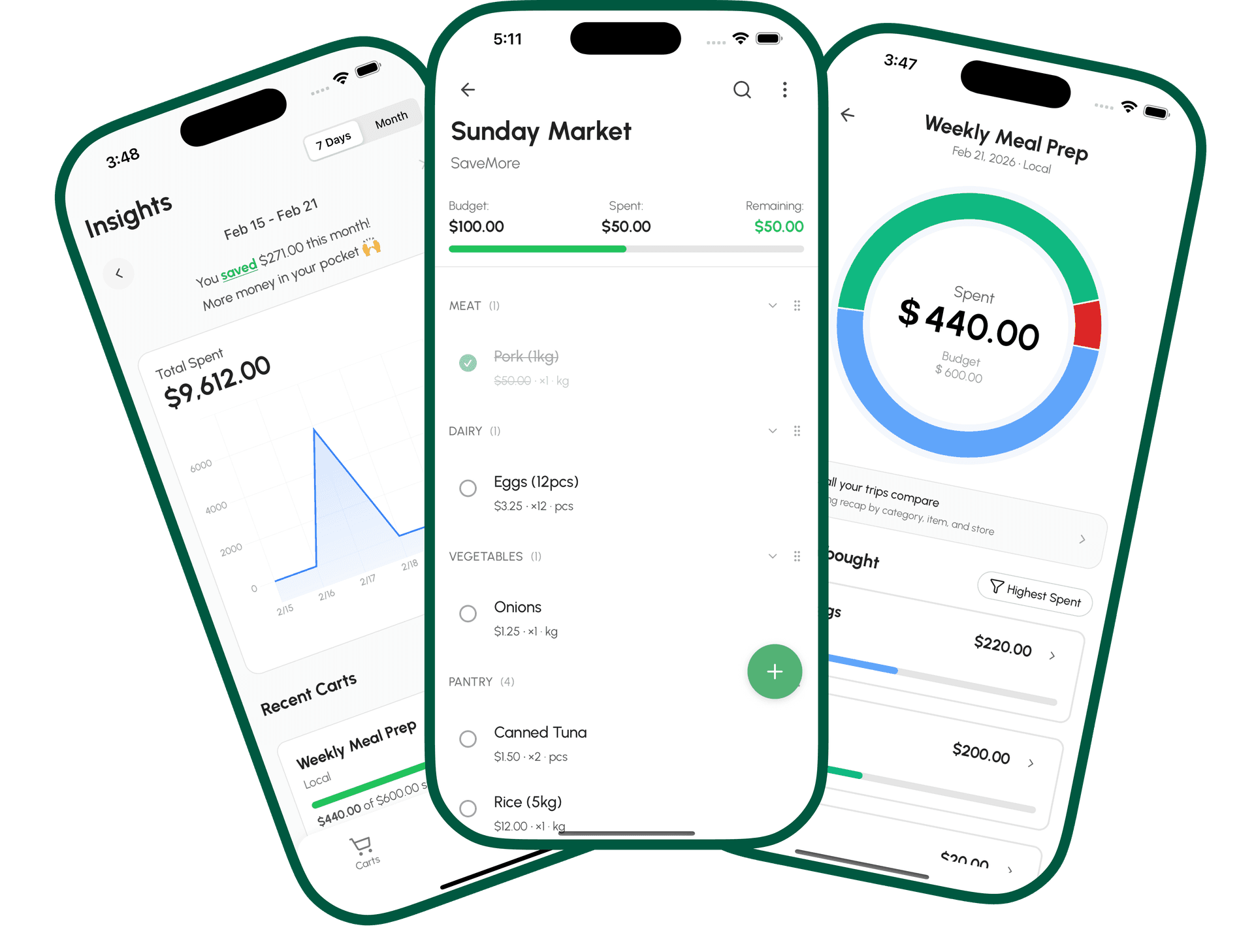
This is where a tool like GroceryBudget fits in. It is not going to lower the price of eggs. What it does is show you your spending patterns, break them down by category, and remember prices over time so you can see what changed and when.
When you can open an app and see that your monthly grocery spend increased by $40, and that $28 of that came from protein and $12 from dairy, you are no longer guessing. You are deciding. Maybe you shift one dinner a week to a plant-based option. Maybe you try a different store for your dairy staples. Maybe you realize $620 is actually fine for your household and the anxiety was worse than the reality.
The point is not to spend less at all costs. The point is to know what you are spending, understand why, and choose your response instead of just reacting.
Worry Is Passive. Tracking Is Active.
Seventy-three percent of Americans are worried about groceries. That number is not going to drop as long as prices keep climbing. The macroeconomic pressures are real. The frustration is valid.
But worry, by itself, does not change anything. It is a signal without a response.
Tracking is the response. It takes the same energy, costs nothing, and converts anxiety into information you can actually use. You will not fix inflation. But you will stop being at the mercy of it.
That is the difference between feeling squeezed and understanding exactly where the pressure is coming from — and what, if anything, you want to do about it.