Average Grocery Cost for a Family of 3: $520–$830/Month
A family of three runs about $520–$830/month in 2026. See the breakdown by tier, why family-of-3 households overspend, and find your own number free.
Key Takeaways
• USDA benchmarks for a family of three at every spending tier.
• Why family-of-3 households often overspend relative to family-of-4 households.
• The fastest way to find your actual baseline and close the gap.
Set this family budget and track what remains while you shop
Turn an average into a practical trip budget instead of relying on a number after checkout.
See the live budget workflow →

If you're feeding three people — two adults and a kid, or one adult and two kids — you've probably noticed most grocery budget guides don't quite fit your household. You're past the two-person efficiency point, but you're not at the scale where bulk buying pays off the way it does for four or more.
Here's what the data says about realistic 2026 grocery spending for your household.
USDA Benchmarks for 3-Person Households
The USDA publishes monthly food cost plans broken down by household size and spending tier. For a family of three (two adults 19–50, one child 6–8) in early 2026:
| Plan | Monthly Cost |
|---|---|
| Thrifty | $520–$570 |
| Low-cost | $670–$730 |
| Moderate-cost | $830–$910 |
| Liberal | $1,020–$1,110 |
Thrifty means nearly all meals cooked at home from basic ingredients, minimal convenience foods, significant meal planning.
Low-cost allows more variety and some convenience items but still requires consistent planning.
Moderate-cost is what most middle-income families actually spend — varied diet, some premium items, occasional prepared foods.
Liberal reflects households that prioritize food quality, buy organic regularly, or live in high cost-of-living areas.
Why Family-of-3 Households Often Overspend
The awkward math of three people causes a predictable overspend pattern:
Portion sizing. Most recipes and packaged goods are designed for four servings. Cooking for three either means leftovers (good) or adjusting recipes (friction that often leads to buying more than needed).
Bulk buying doesn't scale as well. A 5lb bag of chicken thighs makes sense for four people. For three, you might not finish it before it needs to go in the freezer — and frozen protein doesn't always get used.
One child's preferences drive spending up. A child who won't eat certain foods pushes parents toward more expensive convenience alternatives, separate meal prep, or snack foods that inflate the weekly total.
Set this family budget and track what remains while you shop
Turn an average into a practical trip budget instead of relying on a number after checkout.
See the live budget workflow →What Actually Moves the Number
The USDA's moderate-cost plan ($830–$910) is where most three-person households land, but the range within that band is wide. The variables that drive it up:
- Store choice. The same basket of goods costs 20–30% more at Whole Foods or Sprouts vs. Aldi or Walmart.
- Meat frequency and cuts. Chicken thighs vs. chicken breasts. Ground beef vs. steak. Protein sourcing alone can swing $100–$200/month.
- Snack and beverage spending. Often underestimated. Chips, juice boxes, sparkling water, and kid-specific snacks frequently add $80–$150/month without feeling like a significant line item.
- Prepared and convenience foods. Pre-cut vegetables, rotisserie chicken, meal kits — each convenient but expensive per serving.
Finding Your Actual Baseline
Most families don't know their real grocery spend. They have a sense of the weekly total at checkout but forget to include the midweek Target run, the gas station snacks, and the pharmacy where they grabbed milk and cereal.
The only way to know your actual baseline is to track every grocery purchase — including the small ones — for 4 weeks. Once you have that number, you can decide if it's where you want to be.
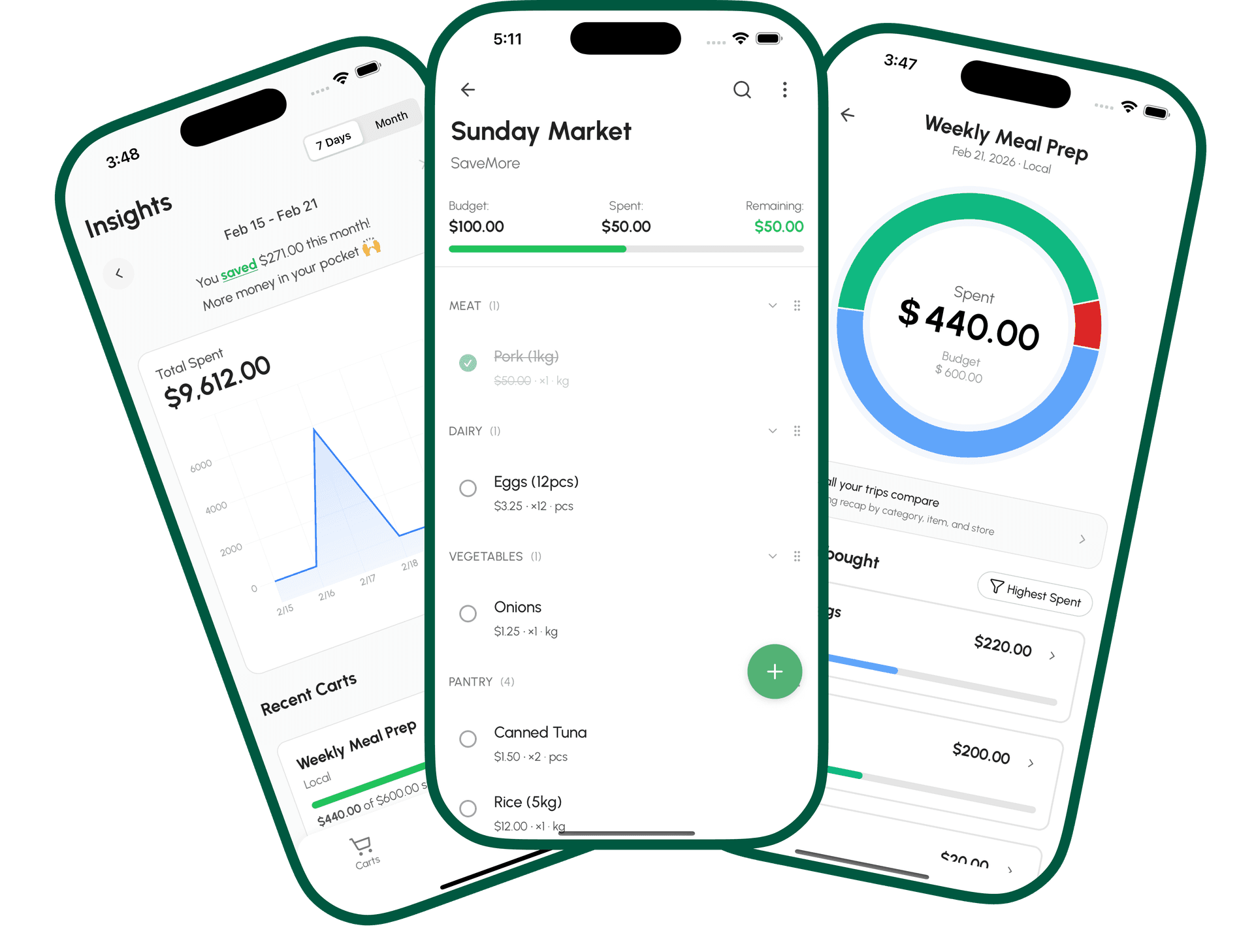
GroceryBudget tracks spending per trip with a running total so you see what you're spending in real time, not after the month ends. After 4 weeks you have a clear picture of your actual grocery baseline — and the data to close the gap if you're over the USDA moderate benchmark.
Download GroceryBudget on iOS or Android — free, no account required.
---
Related: How much to spend on groceries per month in 2026 — USDA benchmarks for all household sizes. Grocery budget for couples — benchmarks and shared budgeting tips. And how to stop overspending on groceries — why the budget fails and what actually fixes it.