Most Cost-Effective Pantry Staples in the Philippines
These 15 pantry staples give you the most meals per peso — ranked by price per serving, shelf life, and nutrition. Stock these and your bill drops fast.
Key Takeaways
• Which staples deliver the most meals per peso in the Philippine market.
• How to build a cost-efficient pantry base for any household size.
• Where to buy each staple cheapest — palengke vs supermarket.
Put this advice to work on your next grocery trip
Plan your list, set a budget, and track the total while you shop.
Explore GroceryBudget features →

A well-stocked pantry cuts your grocery bill two ways: it reduces the number of expensive convenience purchases you make mid-week, and it gives you the base ingredients to stretch fresh items further. For Filipino families, the right pantry staples can mean the difference between a ₱6,000/month grocery budget and a ₱10,000 one.
Here are the staples that deliver the best value — measured by cost per serving, shelf life, and how many different meals they support.
The Core 15
1. Rice (Bigas)
Price range: ₱40–₱55/kg (regular milled), ₱55–₱80/kg (well-milled or premium)
Cost per serving: ₱5–₱8 per cup cooked
Where to buy cheapest: Palengke or NFA rice outlets for regular milled; SM Bonus brand for supermarket value
Rice is the foundation of every Filipino meal. Buying in 25kg or 50kg sacks significantly reduces per-kilo cost. Store in a sealed container to prevent pests.
2. Mongo (Mung Beans)
Price range: ₱80–₱110/kg
Cost per serving: ₱8–₱12 per bowl of ginisang mongo
Where to buy cheapest: Palengke suki stores, typically ₱10–₱20/kg cheaper than supermarket
Mongo is the highest-protein, lowest-cost ingredient in the Philippine pantry. Ginisang mongo with a small amount of pork or sardines feeds four people for under ₱80.
3. Dried Fish (Tuyo / Daing / Danggit)
Price range: ₱80–₱200/100g depending on type
Cost per serving: ₱15–₱30 per person
Where to buy cheapest: Palengke or tiangge — supermarket markup is significant
A few pieces of tuyo with garlic rice and eggs is a complete breakfast for ₱25–₱40 per person. Shelf life of weeks when refrigerated, months when kept dry.
4. Canned Sardines (Ligo, 555, San Marino)
Price range: ₱18–₱28 per can (155g)
Cost per serving: ₱9–₱14 per person
Where to buy cheapest: Supermarket multipacks or warehouse stores (S&R, Landers)
One can feeds two people stretched with rice. Promotional multipacks at SM or Robinsons bring the per-can cost down to ₱15–₱18. Stock 20–30 cans during sales.
5. Canned Tuna (Century Tuna, 555)
Price range: ₱28–₱45 per can (180g)
Cost per serving: ₱14–₱22 per person
Where to buy cheapest: Supermarket, especially during buy-2-get-1 promos
More versatile than sardines — works in sandwiches, pasta, rice toppings, and salads. Century Tuna in brine is the most cost-efficient variant.
6. Cooking Oil (Palm or Coconut)
Price range: ₱70–₱100/liter (generic/house brand)
Cost per serving: ₱2–₱4 per meal
Where to buy cheapest: SM Bonus or Robinsons Selections house brands consistently undercut national brands by 15–20%
Buy in 2L or 3L containers for better per-liter value. Generic palm oil performs identically to branded for everyday cooking.
7. Soy Sauce (Toyo) and Vinegar (Suka)
Price range: ₱25–₱45 per 350ml bottle
Cost per serving: Under ₱2
Where to buy cheapest: Datu Puti and Silver Swan are similarly priced everywhere — buy the largest bottle available
These two form the base of adobo, the most cost-efficient Filipino dish. Adobo keeps for days refrigerated, making it an excellent batch-cook option.
8. Garlic (Bawang)
Price range: ₱80–₱160/kg (varies significantly with harvest season)
Cost per serving: ₱3–₱6
Where to buy cheapest: Palengke — supermarket garlic is significantly more expensive
Buy loose from palengke rather than pre-packed supermarket garlic. Store in a cool, dry place — properly stored garlic lasts 1–2 months.
9. Onion (Sibuyas)
Price range: ₱60–₱120/kg (red onion), ₱80–₱160/kg (white onion)
Cost per serving: ₱4–₱8
Where to buy cheapest: Palengke, especially midweek when supply is high
Red onion is more cost-effective than white for most Filipino cooking. Prices spike during weather disruptions — buy in bulk when prices are low.
10. Eggs
Price range: ₱7–₱9 per egg, ₱185–₱225 per flat (30 eggs)
Cost per serving: ₱14–₱18 for two eggs
Where to buy cheapest: SM Supermarket flats are consistently ₱10–₱15 cheaper than Robinsons per flat
Eggs are the most versatile and cost-efficient protein source in the Philippine pantry. A flat of 30 eggs provides 15 two-egg servings at roughly ₱13 per serving.
11. Instant Noodles (Lucky Me, Nissin)
Price range: ₱10–₱14 per pack
Cost per serving: ₱10–₱14
Where to buy cheapest: 10-pack bundles at supermarkets, typically ₱95–₱108
Emergency meals and budget stretchers. Pancit Canton with egg and whatever vegetables are on hand is a complete meal for under ₱25.
12. Patis (Fish Sauce)
Price range: ₱35–₱55 per 350ml bottle
Cost per serving: Under ₱2
Where to buy cheapest: Consistent pricing across channels — buy Rufina or Barrio Fiesta in the largest bottle
Used in nearly every savory Filipino dish. A single bottle lasts weeks to months depending on cooking frequency.
13. Flour (All-Purpose)
Price range: ₱40–₱60/kg
Cost per serving: ₱5–₱10
Where to buy cheapest: Supermarket house brands (SM Bonus, Robinsons Selections)
Useful for thickening sauces, making simple breads or pancakes, and coating proteins for frying. A 1kg bag lasts weeks for most households.
14. Dried Noodles (Sotanghon, Bihon, Canton)
Price range: ₱18–₱35 per 250g pack
Cost per serving: ₱9–₱18
Where to buy cheapest: Supermarket — consistent pricing, watch for bundle promos
Pancit dishes stretch a small amount of protein across many servings. A 250g pack of bihon with half a kilo of chicken feeds six people for under ₱150 total.
15. Tomato Sauce (Del Monte, Hunt's)
Price range: ₱18–₱30 per 250ml can
Cost per serving: ₱9–₱15
Where to buy cheapest: Supermarket multipacks or buy during 3-for-2 promotions
Base for menudo, mechado, afritada, and pasta dishes. Stock 8–10 cans to have the base for multiple week's meals always available.
Building Your Pantry on a Budget
For a family of four starting from scratch, stocking these 15 staples requires roughly ₱1,500–₱2,500 upfront. After that, your weekly grocery trips shift from "buying everything" to "replenishing what you used" — which consistently costs less per trip.
The key is tracking what you actually use. Buying 50 cans of sardines when your family eats two a week doesn't save money — it ties up cash and risks spoilage.
For a full breakdown of which store wins on each staple category, see our palengke vs. supermarket price comparison and SM vs. Robinsons grocery prices guide.
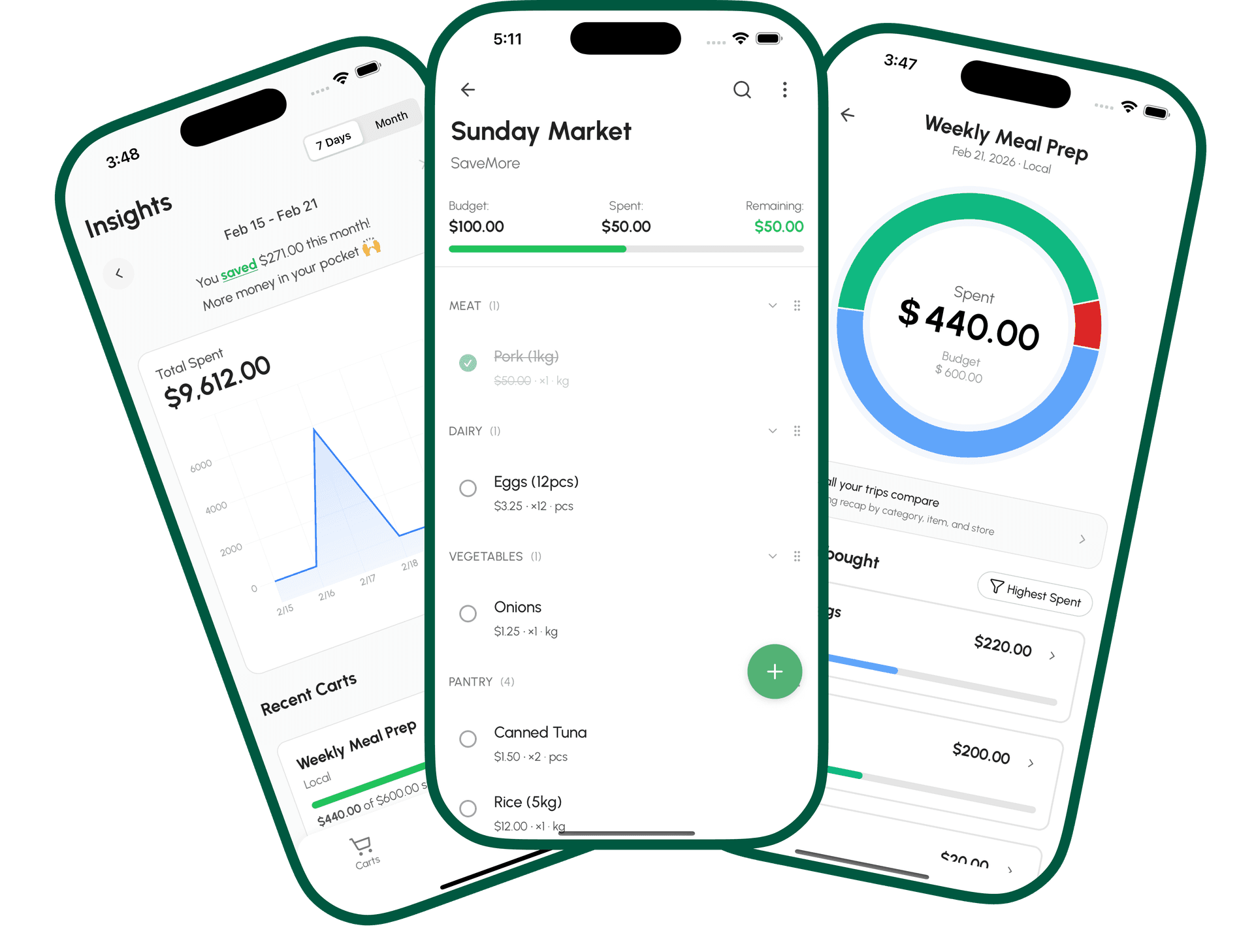
The grocery budget app tracks pantry item prices and quantities across trips, so you can see which staples you go through fastest and time your bulk buys for when prices are lowest.