Grocery Budget for a Family of 4 in the Philippines (2026)
How much should a Filipino family of four spend on groceries monthly? Realistic budget ranges by income level, a sample weekly meal plan, and where it goes.
Key Takeaways
• Monthly grocery ranges for a family of 4 at three income levels.
• A sample weekly meal plan that feeds four for under ₱3,500/week.
• The highest-leverage changes to make if you're over budget.
Put this advice to work on your next grocery trip
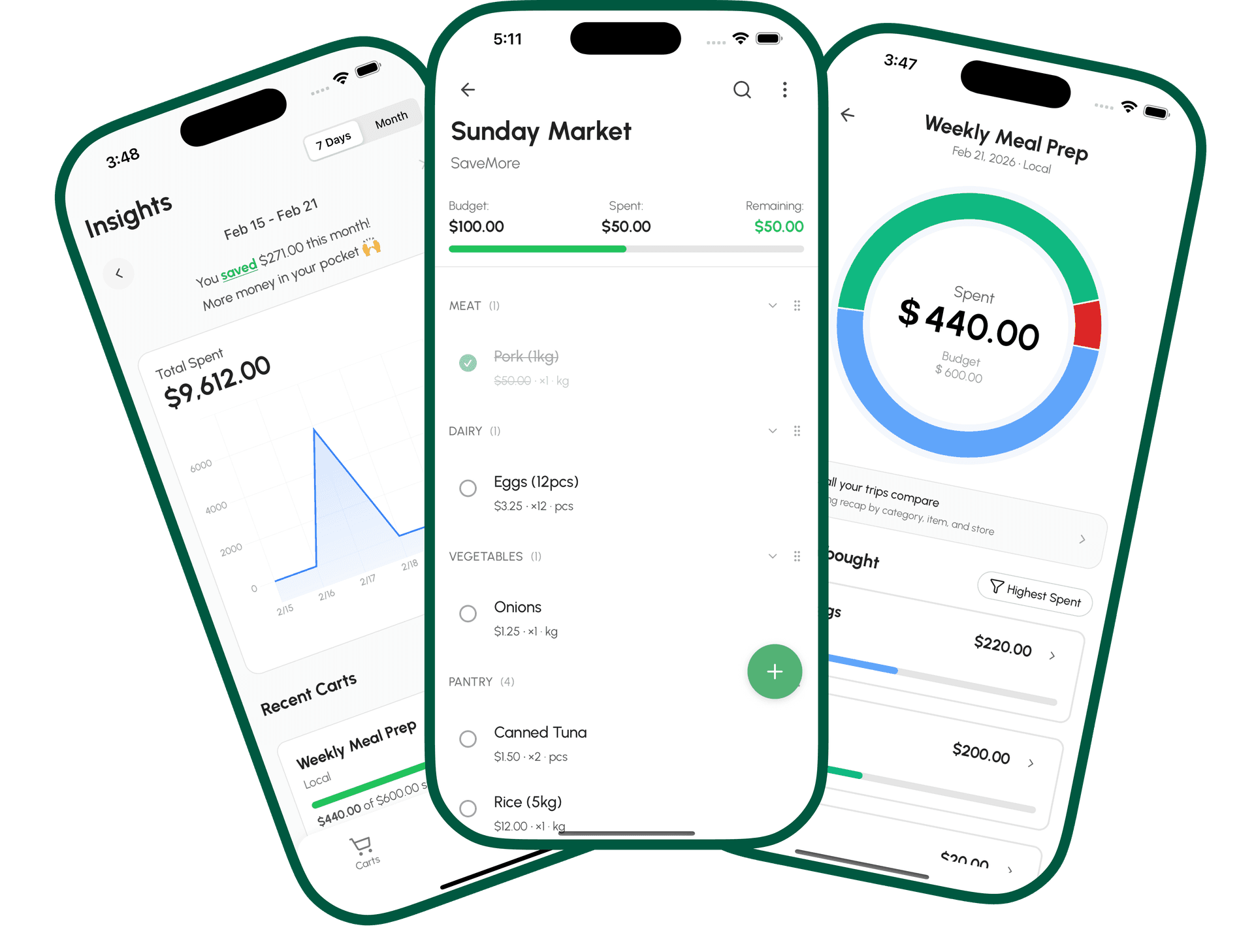
Plan your list, set a budget, and track the total while you shop.
Explore GroceryBudget features →

A family of four — two adults and two children — is the most common Filipino household composition, and grocery planning for this size has its own economics. You're buying enough to make bulk purchasing worth it, but not so much that spoilage becomes a major problem.
Here's what realistic monthly grocery spending looks like in 2026.
Budget Ranges by Income Level
Tight Budget: ₱5,000–₱7,000/month
Weekly spend: ₱1,250–₱1,750
This is achievable but requires consistent planning and palengke shopping. Protein comes primarily from eggs, canned goods, dried fish, and occasional fresh chicken or pork in small quantities.
Monthly breakdown:
- Rice (25kg sack) → ₱1,100–₱1,400
- Eggs (3–4 flats) → ₱600–₱840
- Canned sardines, tuna, corned beef → ₱600–₱900
- Dried fish (tuyo, daing) → ₱300–₱500
- Fresh vegetables → ₱600–₱900
- Fresh protein 2–3x/week (chicken, pork offcuts, bangus) → ₱800–₱1,200
- Cooking oil, condiments, spices → ₱400–₱600
- Snacks and miscellaneous → ₱200–₱400
What this looks like in practice: Three full meals daily, protein at every meal (though not always expensive protein), and enough variety to keep meals interesting. No significant convenience foods.
Moderate Budget: ₱8,000–₱12,000/month
Weekly spend: ₱2,000–₱3,000
At this level, fresh protein appears daily, vegetables are varied, and there's room for fruit, dairy, and occasional treats.
Monthly breakdown:
- Rice (25–30kg) → ₱1,400–₱1,800
- Eggs (3 flats) → ₱600
- Fresh meat and fish (chicken, pork, bangus, tilapia — 4–5x/week) → ₱2,000–₱3,000
- Vegetables (wide variety) → ₱1,000–₱1,500
- Fruit → ₱400–₱700
- Dairy (fresh milk, cheese) → ₱400–₱600
- Canned goods and pantry items → ₱500–₱800
- Snacks, juice, miscellaneous → ₱500–₱800
What this looks like: Three full meals, fresh protein most days, fruit with breakfast or merienda, occasional dessert. Children's school baon factored in.
Comfortable Budget: ₱13,000–₱18,000/month
Weekly spend: ₱3,250–₱4,500
Premium cuts, organic options, imported goods, and less cooking stress. This tier allows for significant convenience without eating out frequently.
Put this advice to work on your next grocery trip
Plan your list, set a budget, and track the total while you shop.
Explore GroceryBudget features →Sample Weekly Meal Plan (Moderate Budget, ₱2,500/week)
Monday
- Breakfast: Garlic rice + scrambled eggs + fresh tomatoes
- Lunch: Sinigang na baboy (small cut, heavy vegetables)
- Dinner: Adobong manok + steamed rice
Tuesday
- Breakfast: Oatmeal + banana
- Lunch: Leftover adobo + rice
- Dinner: Pinakbet + fried egg + rice
Wednesday
- Breakfast: Pan de sal + cheese + coffee/milk
- Lunch: Ginisang mongo with dried fish
- Dinner: Fried bangus + tomato-onion salad + rice
Thursday
- Breakfast: Garlic fried rice + tocino (homemade or affordable brand)
- Lunch: Chicken arroz caldo (uses leftover chicken)
- Dinner: Chopsuey + rice
Friday
- Breakfast: Eggs + pandesal
- Lunch: Sardines in tomato sauce + rice
- Dinner: Lechon paksiw (using affordable pork belly) + rice
Saturday
- Breakfast: Champorado + tuyo
- Lunch: Nilagang baka (small portion, heavy vegetables)
- Dinner: Family meal — slightly more festive (kare-kare, fried chicken, or similar)
Sunday
- Breakfast: Sinangag + leftover proteins
- Lunch: Simple pasta with canned tuna
- Dinner: Batch cook for the week — adobo or caldereta
Estimated weekly cost for four: ₱2,200–₱2,600
The Highest-Leverage Changes
If you're over budget, these three changes have the most impact:
1. Shift protein sources. The difference between a chicken breast meal and an egg meal is ₱40–₱80 per serving. Three egg-based meals per week instead of meat-based saves ₱480–₱960/month for a family of four.
2. Buy rice in bulk. A 25kg sack at ₱1,100–₱1,400 vs. buying 2–3kg at a time adds up to ₱200–₱400/month in savings.
3. Track your actual spending. Most families who go over budget don't know exactly where the money went — convenience store runs, sari-sari trips, and unplanned market visits add ₱500–₱1,500/month that never shows up in the mental grocery budget.
The grocery budget app tracks every trip — palengke, supermarket, and sari-sari — so your family sees the real monthly total. Free, works offline, supports Philippine peso.