Does Tracking Your Groceries Actually Save You Money?
Yes — but not for the reason most people assume. Here's the data on how grocery tracking changes spending behavior, and what happens when people stop.
Key Takeaways
• Research-backed evidence that budget tracking leads to real savings.
• The specific behavioral changes that happen when you see your data.
• Why tracking works even when prices are outside your control.
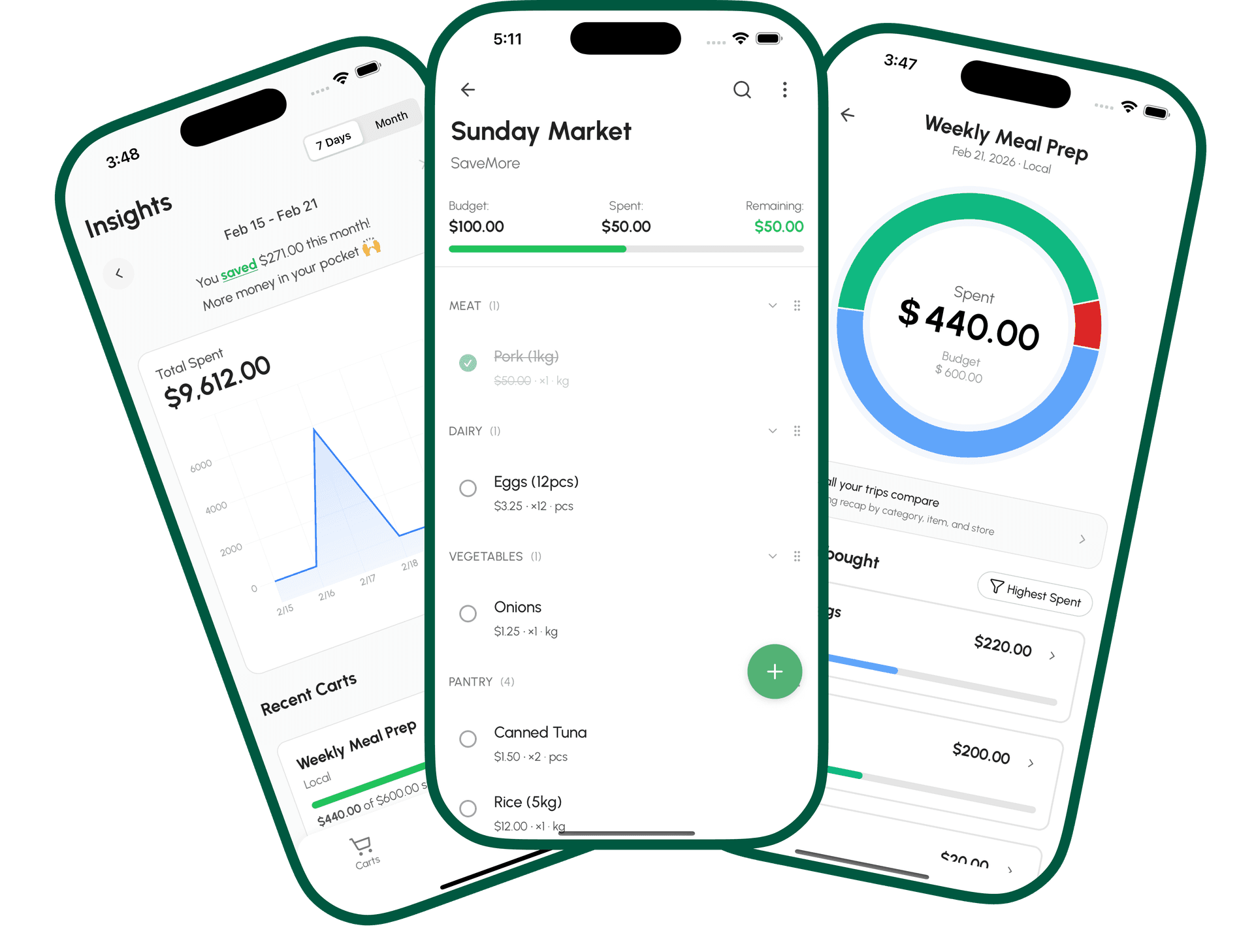
Track your grocery spending as you shop
Free to use. Works offline, no account needed.


There's a reasonable argument against tracking grocery spending: why bother? Prices are set by stores. Inflation is real. Tariffs, supply chain disruption, diesel costs — none of that changes because you opened an app.
Fair point. So let's look at the evidence.
What the Research Says
The skeptic's case assumes that savings only come from lower prices. But that's not where most grocery waste happens.
Families who actively budget and track their spending save roughly $200 per month on average — not because prices dropped, but because their behavior changed. Meal planning alone accounts for a significant portion of that, primarily by cutting impulse buys and food waste.
And food waste is enormous. The average American household throws away 30–40% of the food it purchases. That's $150–200 per month going straight into the trash. Not because of prices. Because of buying patterns.
There's another finding that matters here: people consistently underestimate their grocery spending by about 25%. When researchers ask households what they spend and then compare it to actual receipts, the gap is significant. You can't optimize spending you're not accurately measuring.
Studies consistently show that budgeting behaviors — tracking, reviewing, adjusting — are positively correlated with better financial outcomes. Not because budgeters earn more, but because they allocate more deliberately.
The 5 Behavior Changes That Create Savings
The data is useful, but it's abstract. Here's what actually changes when you start tracking.
1. You stop invisible spending
Those quick "just need milk" trips? They account for about 31% of total grocery spending. You walk in for one item and walk out with a bag. Individually, each trip seems minor. Over a month, they add up to hundreds of dollars.
Tracking makes these trips visible. When you see seven unplanned store visits in your spending history, you start consolidating. Not because someone told you to — because the data made it obvious.
2. You catch category creep
Most people assume meat and produce dominate their grocery bill. Often, snacks and convenience items quietly rival those categories in total spend. You don't notice because you're adding $4 here and $6 there.
Category breakdowns change that. When you see that you spent $187 on snacks and beverages last month — almost as much as your entire produce spend — it reframes your decisions. You're not cutting things out. You're making informed tradeoffs you couldn't make before.
3. You spot fake sales
Here's a common grocery store tactic: raise a price, then put it "on sale" at or above the old price. If pasta cost you $3.20 last month and the store is advertising "SALE: $3.49!" — that's not a deal. It's a markup with a yellow tag.
But you'd only know that if you had price memory. When you track what you've paid for items over time, sale prices become verifiable claims instead of impulse triggers. This is one of the most underrated benefits of tracking — it turns you into a harder customer to manipulate.
4. You switch stores for staples
Most people shop at one store out of habit. Tracking your spending across stores reveals something specific: price differences on high-volume staples are significant. Milk, eggs, bread, rice, chicken — the items you buy every single week can vary by 20–30% between stores in the same area.
Comparing prices across stores on just your top staples can surface $35–45 per month in savings. Not by couponing or deal-hunting — by buying the same things at a cheaper location for the items where it matters most.
5. You waste less food
When you can see what you spend, you buy more intentionally. The "might need this" purchases — the second bag of spinach, the extra bell peppers, the aspirational recipe ingredients — get scrutinized differently when you know they cost you $40 last month and half of it went bad.
Tracking doesn't just show you what you spent. It creates a feedback loop. You see the waste in your data, so you buy tighter next time. You see the result, and the habit reinforces itself.
Stop guessing what your groceries cost
Free to use. Works offline, no account needed.
The Psychological Angle
There's a less obvious benefit to tracking that has nothing to do with dollars: it reduces financial anxiety.
Seventy-three percent of Americans report being worried about grocery costs. But vague worry is more stressful than specific knowledge. "Everything is so expensive" is an overwhelming feeling with no clear action. "My meat spending went up 8% this month, but my overall budget is on track" is a specific fact you can work with.
Budget alerts and spending insights convert ambient stress into concrete information. You stop dreading the checkout total because you already know where you stand. The anxiety doesn't come from spending money — it comes from not knowing where it's going.
What Tracking Doesn't Do
Honesty matters here. Tracking your groceries will not lower the price of eggs. It won't change tariff policy. It won't make diesel cheaper. It won't reverse inflation.
But here's the thing: 60–70% of your grocery bill is within your control. What you buy. Where you buy it. How much you waste. Whether you stick to a plan or wing it every trip. Tracking gives you leverage over the part of the equation that's actually yours to change.
The skeptic is right that you can't control prices. The skeptic is wrong that this means tracking is pointless. Those are two different claims.
The Bottom Line
You can't control the price of chicken. You can control whether you buy it at the store charging $2 more per pound. You can control whether you buy three other things you didn't need while you were there. You can control whether it sits in your fridge until it expires.
That's where the savings are. Not in the price tag — in the pattern.
Tracking works not because it changes the market, but because it changes you. It replaces guessing with data, impulse with intention, and vague stress with specific knowledge.
The families saving $200 a month aren't finding secret deals. They're making the same trips to the same stores — they're just making them with their eyes open.