Grocery Budget for Couples in 2026: What's Realistic
Two people, one budget, different habits. How couples can set a grocery budget that works, with real benchmarks and the fix for checkout surprises.
Key Takeaways
• What couples realistically spend on groceries by budget tier.
• Why shared visibility — not shared responsibility — is what makes couple budgets work.
• How to set a per-trip budget you both can see in real time.
Put this advice to work on your next grocery trip
Plan your list, set a budget, and track the total while you shop.
Explore GroceryBudget features →

Grocery budgeting as a couple introduces problems that solo budgeting doesn't have: two people with different spending habits, different preferences, and often different ideas about what "reasonable" looks like at the grocery store.
The average two-person household in the US spends $475–$600/month on groceries according to 2025 BLS data. Whether that's reasonable for you depends on where you live, how often you cook, and what you eat.
Realistic Monthly Benchmarks for Two People
Tight budget: $250–$350/month
Achievable with consistent meal planning, mostly home cooking, limited convenience foods and premium brands. Requires intentionality but not deprivation.
Moderate budget: $400–$550/month
The most common range for couples who cook regularly, occasionally buy premium items, and don't stress too hard about every purchase. Allows for some convenience foods, better produce, and the occasional splurge.
Comfortable budget: $600–$800/month
Organic produce, premium proteins, specialty items, nicer snacks and drinks. Little friction around individual grocery decisions.
High cost-of-living adjustments: Add 15–25% for NYC, SF, Boston, or other major metro areas. Subtract 10–20% for lower cost-of-living regions.
Why Couple Grocery Budgets Usually Fail
The most common failure mode isn't the budget number itself — it's that only one person knows what it is while the other person shops.
Partner A does a big weekly shop and spends $180. Partner B stops at the store midweek and spends $65. The week ends, you've spent $245, and you're over a $200 weekly target nobody explicitly communicated.
The solution isn't stricter rules. It's shared visibility.
When both people can see the running total — how much has been spent this week, how much is left in the budget — the decisions regulate themselves. Nobody needs to police anyone. You both see the same number.
Put this advice to work on your next grocery trip
Plan your list, set a budget, and track the total while you shop.
Explore GroceryBudget features →Making a Shared Grocery Budget Work
Set a per-trip limit, not just a monthly number. A $500/month budget is abstract. A $125/week budget is concrete. A $60 limit on today's quick run is actionable in the store.
Both partners track their purchases. If one person shops, they add to the shared running total. The other person can see it. Neither person is in the dark when the other shops.
Sync before big shops. Five minutes before a major grocery trip to agree on the budget and any specific items prevents the "I didn't know you already bought that" problem.
Build in a buffer. Set your working budget at 85–90% of your actual limit. The buffer absorbs price changes and forgotten items without blowing the budget.
The Right App for Couple Grocery Budgeting
Most budgeting apps track grocery spending after the fact — you see the damage when your bank syncs, not while you're in the store. That's too late to make different choices.
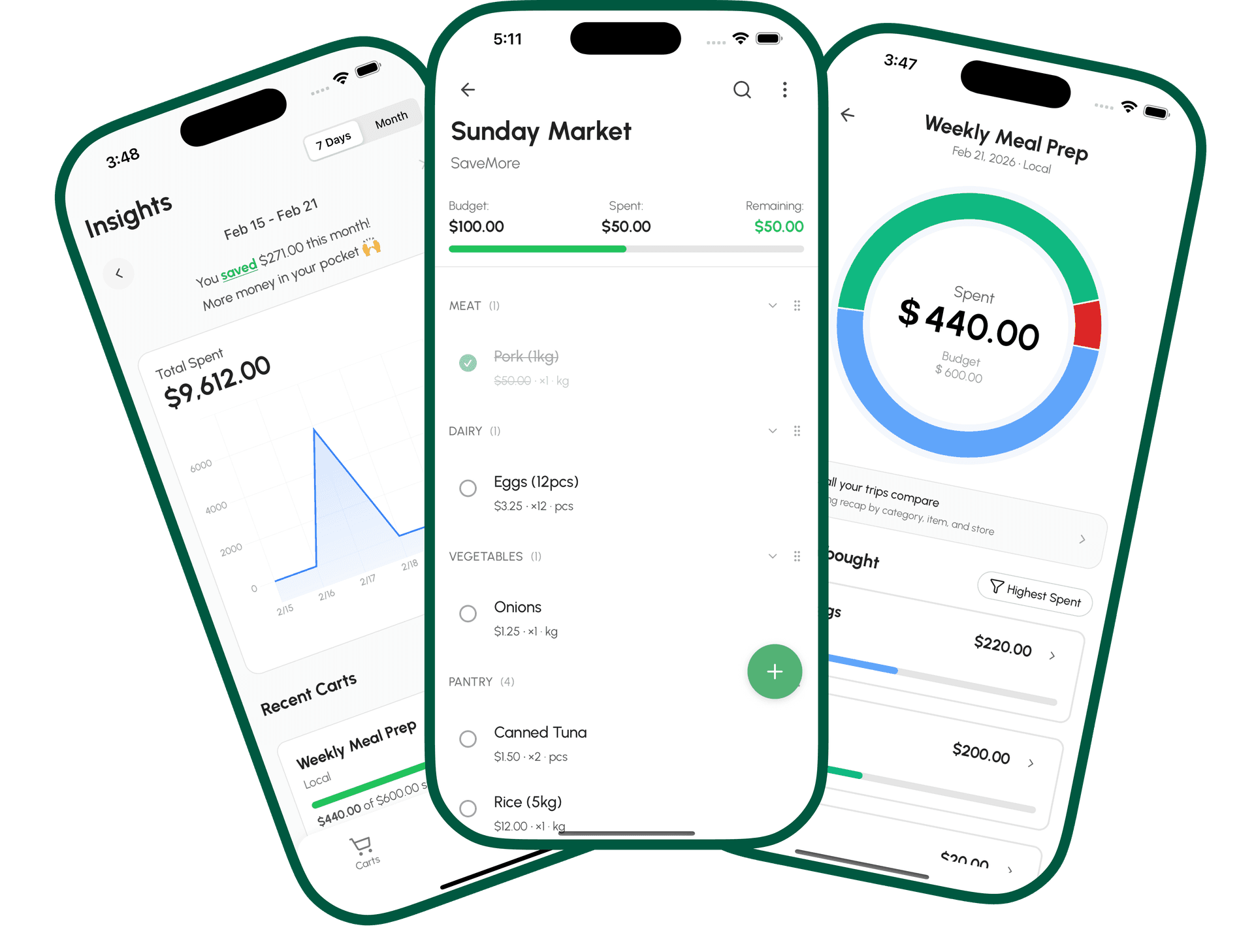
GroceryBudget is built for the shopping trip itself. You set a budget, add items as you shop, and see your running total in real time. Family Sharing lets both partners contribute to the same cart from their own phones — if you're shopping separately, you're both updating the same shared total.
Key features for couples:
- Shared carts — both phones, one running total
- Budget bar — visual progress toward your limit, visible to both of you
- Price memory — remembers prices from last time so entry is fast
- Offline support — works in stores with poor signal
- No account required — free to start on first launch
Download GroceryBudget on iOS or Android — free, no account needed.
---
Related: How much to spend on groceries per month in 2026 — USDA benchmarks for every household size. Grocery budget by income — percentage-based targets by salary. And how to stop overspending on groceries — why budgets fail and how real-time tracking fixes it.