Compare Grocery Prices Across Stores — Including Bulk Buying
Stop guessing which store is cheaper, bulk buying included. GroceryBudget remembers what you paid everywhere, so you can compare stores automatically.
Key Takeaways
• No single store is cheapest for everything: warehouse stores win on bulk, discount grocers on produce, conventional stores on weekly sales.
• The practical approach is recording prices as you shop normally — not making special comparison trips to five different stores.
• After 8-12 weeks of data, most households find a two-store routine that saves meaningfully without extra time or effort.
Track your grocery spending as you shop
Free to use. Works offline, no account needed.


The obvious answer to finding the cheapest groceries is to check every store. Nobody actually does that. Driving to three or four different supermarkets every week costs more in time and gas than it saves on groceries.
There's a smarter approach — one that builds useful price data over time without requiring extra trips.
Why Store Price Comparisons Are Hard in Practice
Grocery prices change constantly. A store that had the best price on chicken last month might not have it this week. Seasonal shifts, promotions, and supply changes mean the "cheapest store" is a moving target.
And even when people try to compare prices, they're usually comparing from memory — which is unreliable. You think Store A is cheaper for produce, but is that actually true, or is that just an impression from one trip six months ago?
Real comparison requires real data, collected over time.
The Key Insight: Not Every Store Wins on Everything
Price comparison research consistently finds that no single store is cheapest for everything. The typical pattern:
- Warehouse stores (Costco, Sam's Club) win on bulk staples — paper goods, cooking oil, nuts, canned goods — but require buying more than most families need of any given item, plus a membership fee that has to pay for itself first
- Discount grocers (Aldi, Lidl) have low everyday prices on produce and store-brand staples
- Conventional supermarkets run weekly sales that sometimes beat everyone else on specific items
- Specialty stores are almost always more expensive on staples but may have items you can't find elsewhere
The goal isn't to find the one cheapest store. It's to know which store wins on the items you actually buy most often.
Building a Price Database Without Extra Trips
Here's the approach that works without disrupting your shopping routine:
Step 1: Identify your top 15 items. These are the things you buy almost every week — milk, eggs, bread, chicken, whatever your household runs through consistently. These items are worth tracking because small price differences compound across 52 trips per year.
Step 2: Record prices as you shop normally. You're already in the store. You're already picking up these items. The extra step is recording the price — which takes about three seconds per item.
Step 3: When you happen to be at a different store, check those same items. You don't need to make special trips. Anytime you're at a different store for any reason, check your top items.
Step 4: Review the data after a few months. Once you have prices from multiple stores across several weeks, patterns emerge. You'll be able to see which store is consistently cheaper for which items — not based on a single visit, but based on actual data.
Stop guessing what your groceries cost
Free to use. Works offline, no account needed.
What the Data Usually Reveals
After 8-12 weeks of tracking, most people discover a few consistent patterns:
One store wins on protein. Meat and poultry prices vary significantly between stores. A difference of $1-2 per pound on chicken breast, repeated over a year, adds up to real money.
Produce prices are the most volatile. The "cheap produce store" can be the most expensive after a single bad week. If you shop at multiple stores, you'll often have a sense of where produce is good value right now versus which store is having a bad stretch.
Store brands across different stores are often the same price. Paying more for a name brand at a premium supermarket instead of the store brand at a discount grocer can mean paying 30-40% more for the same product.
Sale prices at conventional supermarkets occasionally beat everyone. If a store runs a 50% off sale on your most-purchased protein, buying extra at that point (assuming you'll freeze it) often beats your default cheapest source.
The Practical Payoff
Once you have 2-3 months of price data on your top items, you can make a simple decision: which one or two stores are worth maintaining as your regular sources?
Most households end up with a two-store routine — a discount grocer for produce and everyday staples, and one other store for specialty items or when a good sale runs. That's one extra stop, made deliberately, not four stores visited at random hoping to save money.
Tracking Prices Without Doing It by Hand
Maintaining a price database manually — in a spreadsheet or a notes app — is genuinely tedious. The friction kills the habit within a few weeks for most people.
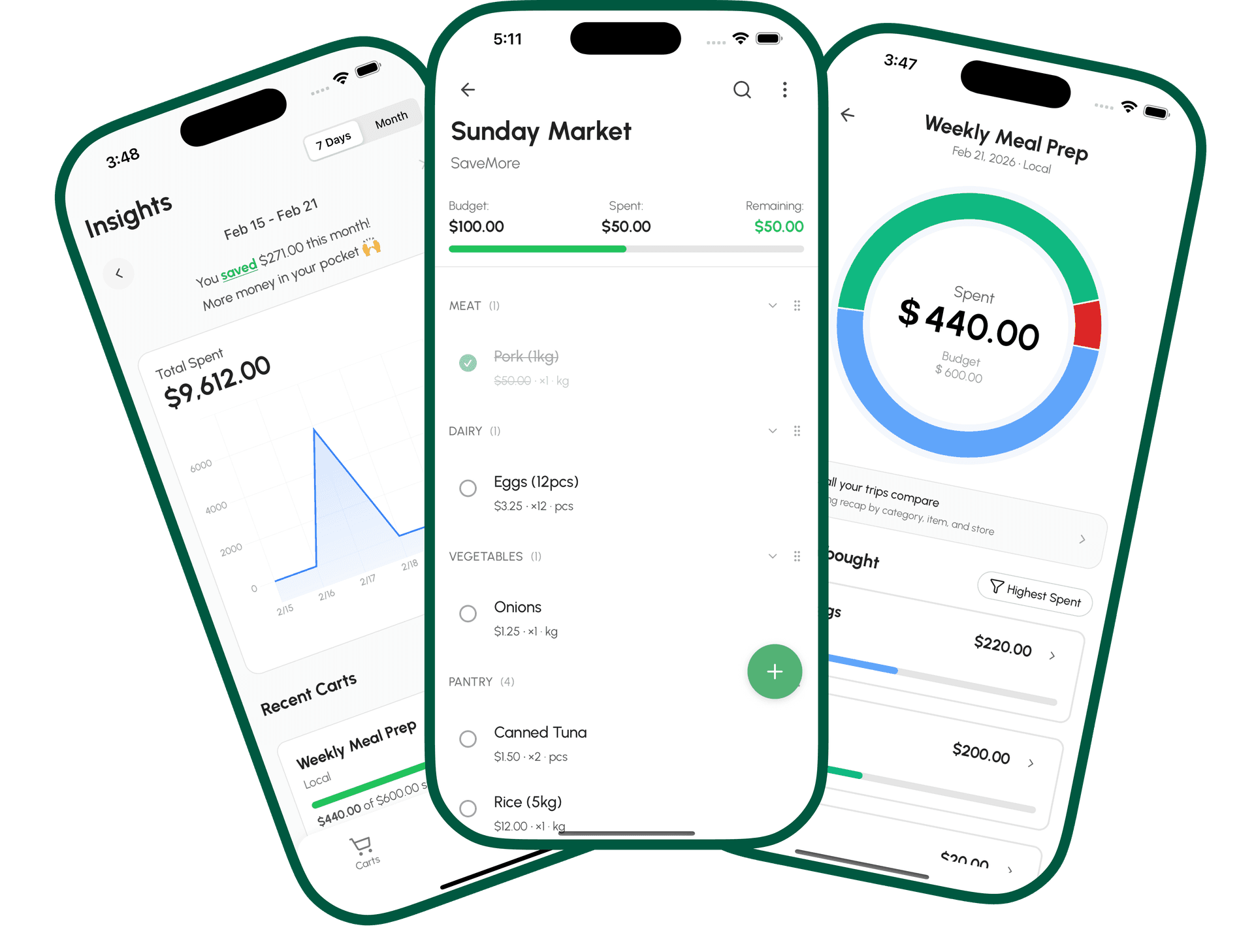
GroceryBudget's price memory system handles this automatically. Every time you log an item with a price at a specific store, that price is recorded against that store. Over time, the app builds up a price history for each item across the stores you shop at. Premium users can view that history directly — see what you paid for eggs at each store, when prices changed, and which store has the lower average.
The store comparison feature puts it in one view: here's what your cart would cost at Store A vs. Store B based on prices you've actually paid. Not estimated prices, not guesses — your own purchase history.
This is how comparison shopping works without extra trips. You collect data as a byproduct of shopping you're already doing, and the data tells you where to direct your buying decisions going forward.
Getting Started
You don't need to do anything elaborate. On your next grocery trip:
- Note the store you're at
- Record prices on your top 10 items
- Do the same next time you're at a different store
After a month, you'll have more useful price comparison data than most households accumulate in a year — and you'll start seeing where the real differences are.
The point isn't to become obsessive about price comparison. It's to make informed decisions once, so you stop leaving money on the table every week without realizing it.
Frequently Asked Questions
How do I compare grocery prices across stores for bulk buying?+
Compare per-unit price, not the sticker price. Warehouse clubs like Costco and Sam's Club usually win on bulk staples — paper goods, oil, canned goods, nuts — but require a membership fee and larger quantities than most households need. Work out the per-unit cost at your regular store first, then check whether the bulk price (after factoring in the membership fee) actually beats it for items you'll use before they expire.
Is buying in bulk always cheaper?+
No. Bulk pricing wins on non-perishables you use steadily — rice, paper towels, canned goods — but loses on perishables you can't finish before spoilage, and on items you buy rarely, where the membership fee outweighs the per-unit savings.