How to Stop Impulse Buying at the Grocery Store
Impulse purchases add $50-$75 to the average grocery trip. Here's why they happen and what actually works to stop them.
Key Takeaways
• Why grocery stores are designed to make you overspend.
• Practical strategies that reduce impulse buying without willpower.
• How real-time budget tracking changes your behavior in the store.
Track your grocery spending as you shop
Free to use. Works offline, no account needed.


The Numbers Behind Impulse Buying
A 2023 study by Slickdeals found that the average American spends about $314 per month on impulse purchases, with grocery stores being one of the top three locations where it happens.
Think about your last grocery trip. You walked in for five things. You walked out with a bag of chips, a magazine, fancy cheese, sparkling water you didn't need, and a "deal" on something you wouldn't have bought at full price.
That's not a personal failing. It's the result of a store that's been professionally designed to make you buy more.
Why It Happens
Store Layout is Engineered
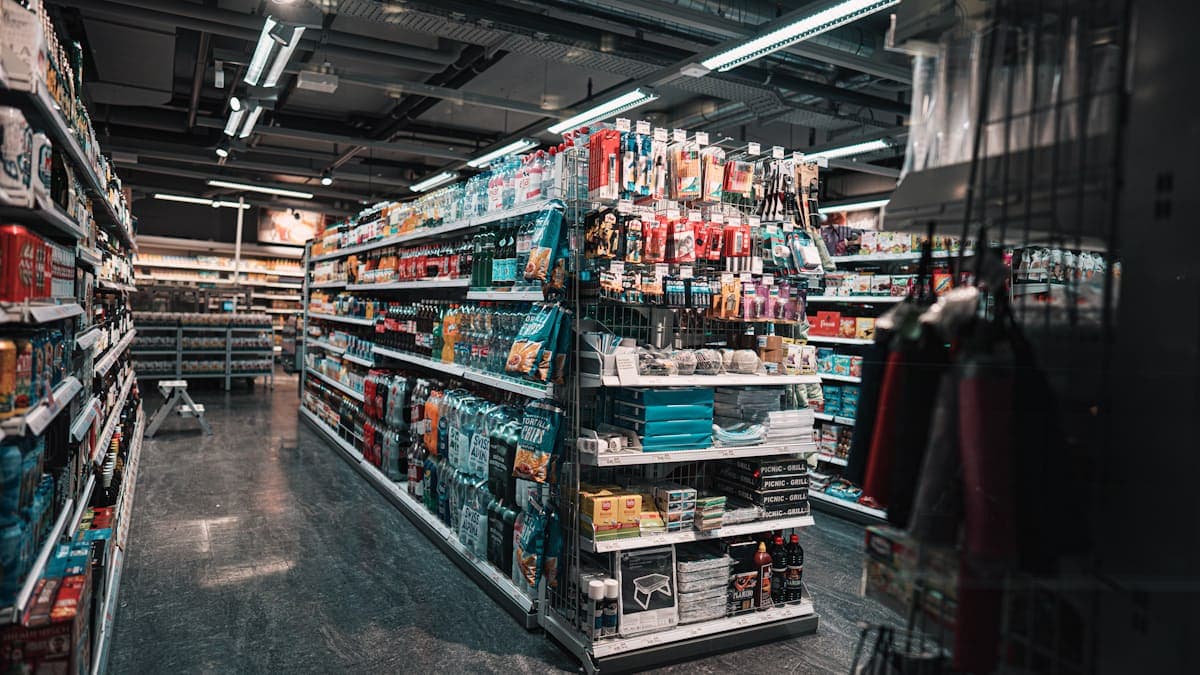
Grocery stores are not arranged for your convenience. They're arranged for maximum spending.
Essentials are in the back. Milk, eggs, and bread are placed as far from the entrance as possible. You have to walk past hundreds of other products to reach them.
Endcaps create urgency. Those displays at the end of each aisle look like deals. Some are. Many aren't. They exist to interrupt your path and catch your attention.
Eye-level products are premium. The most expensive brands pay for eye-level shelf placement. Store brands and budget options are on the top and bottom shelves where you have to look for them.
Checkout lanes are traps. Candy, magazines, gum, drinks, and small items line the checkout area because you're standing there with nothing to do but look at them.
Psychology Works Against You
Decision fatigue. By the time you've made 50 small decisions about what to buy, your ability to say "no" deteriorates. Late in the trip, your defenses are down.
The "treat yourself" effect. After a long day or a stressful week, adding comfort food to the cart feels justified. You've earned it. But you've "earned it" every week for the past six months.
Loss aversion with sales. "Save $2.00" on something you don't need means you spent $4.00, not saved $2.00. But the "sale" framing makes it feel like you'd lose money by not buying it.
Hunger. Shopping hungry is the oldest advice for a reason. It works. Your brain treats every food item as more desirable when your blood sugar is low.
Stop guessing what your groceries cost
Free to use. Works offline, no account needed.
What Actually Works
Before the Store
Eat first. It sounds basic because it is. Shopping after a meal versus shopping hungry can reduce your total by 10-15%.
Make a list with prices. A plain list helps you remember items. A list with prices helps you budget. When you see that your list totals $72 and your budget is $80, you know you have $8 of room for extras, not unlimited room.
Set a hard budget. Not "around $80." Exactly $80. A specific number creates a constraint. "Around $80" means $95 felt close enough.
In the Store
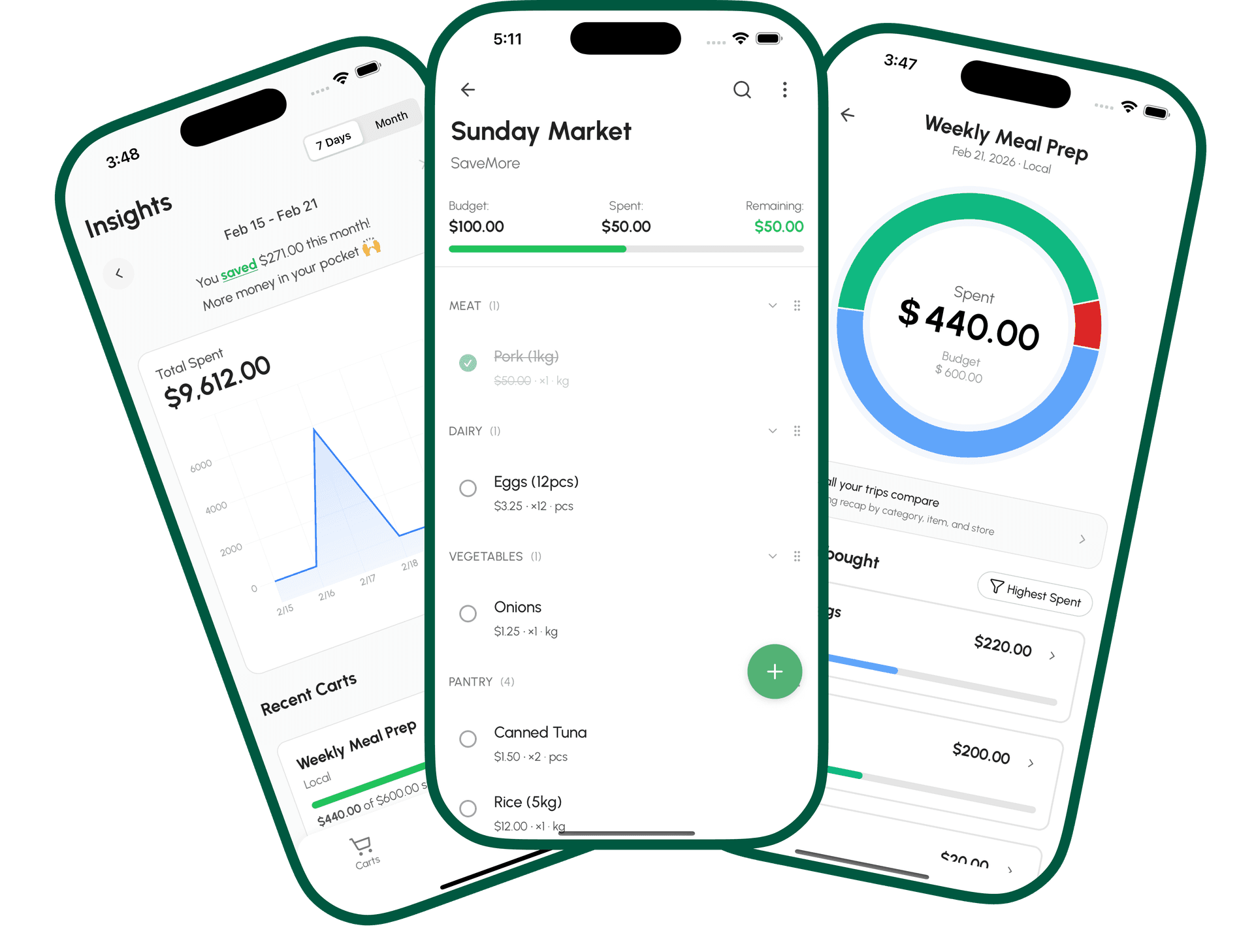
Track your running total. This is the single most effective way to stop impulse buying. When you can see that you're at $67 out of $80 with three items left on your list, adding a $6 bag of fancy trail mix means something different than when you have no idea what your total is.
GroceryBudget shows your budget, spent, and remaining in real time as you check items off. You make every add/skip decision with full visibility into what it means for your budget.
Wait 10 seconds. When you pick up something that's not on your list, hold it for 10 seconds. Ask yourself: "Would I drive back to the store just to buy this?" If no, put it back.
Skip the inner aisles. The perimeter of the store has produce, dairy, meat, and bakery. The inner aisles have processed foods, snacks, and most impulse triggers. If it's not on your list, don't walk down the aisle.
Use a basket, not a cart. If you're buying fewer than 15 items, use a hand basket. It physically limits how much you can carry. A half-empty cart feels like an invitation to fill it.
After the Store
Review your receipt. Circle anything you bought that wasn't on your list. Add up those items. That's your impulse spending for the trip. Seeing the number makes it real.
Track the pattern. If you impulse-buy chips every week, that's not an impulse. It's a preference. Put it on your list and budget for it. The problem isn't buying chips. The problem is buying chips without accounting for them.
The Real Fix: Visibility
Most impulse buying advice focuses on willpower. "Just say no." "Be disciplined." "Stick to your list."
That's like telling someone to drive the speed limit without a speedometer. You need feedback.
The most effective change you can make is seeing your running total in real time as you shop. When the number is visible, every item you add becomes a conscious decision: "Is this worth $4.50 of my remaining $12?"
That's not willpower. That's information. And information changes behavior far more reliably than discipline.
A Realistic Approach
You don't need to eliminate impulse buying entirely. That's not realistic and it's not fun. The goal is to control it.
Budget for it. Set your list total at 85% of your budget. The remaining 15% is your impulse buffer. If your budget is $100, plan $85 worth of items and give yourself $15 of freedom. You get to grab something spontaneous without going over budget.
One unplanned item per trip. If you limit yourself to one item that's not on the list, you'll choose carefully. That one item feels like a reward instead of a failure.
Track it over time. If your unplanned spending drops from $40/trip to $15/trip over a few weeks, that's $100/month back in your pocket. Real numbers motivate more than guilt.
Start with your next trip. Set a budget. Track your total as you shop. See what happens when you have full visibility into every dollar.