How to Track Grocery Spending on Your Phone
Tracking grocery spending shouldn't feel like accounting homework. Here's a simple method that works while you shop — not after.
Key Takeaways
• Tracking after the fact doesn't stick — receipts pile up and spreadsheets go stale; tracking while you shop is the only method that lasts.
• A running total while shopping lets you course-correct in real time, before you reach the checkout.
• After 30 days of consistent tracking, most people find they've been spending 20-30% more than they thought.
Put this advice to work on your next grocery trip
Plan your list, set a budget, and track the total while you shop.
Explore GroceryBudget features →

You know you should track your grocery spending. You've probably tried — a notes app, a spreadsheet, maybe saving receipts in a drawer. It lasted about two weeks. The problem isn't motivation. It's that most tracking methods add friction to something you already don't enjoy doing.
Why most people fail at tracking groceries
The common advice is simple: write down what you spend. But here's why it doesn't stick:
Receipts pile up. You tell yourself you'll enter them later. You don't. By Friday you have five crumpled receipts and no desire to deal with them.
Spreadsheets are after-the-fact. Even if you're disciplined about entering data, you're reviewing spending that already happened. You can't un-buy the $12 fancy cheese.
General budget apps are too broad. Apps like YNAB or Mint categorize everything — rent, subscriptions, dining out, groceries. Groceries end up as one line item with no detail about what you actually bought or where.
Notes apps have no structure. Typing "eggs 4.99 bread 3.50 chicken 8.99" into your notes works once. It doesn't add up your total, track trends, or tell you anything useful over time.
The method that actually works
The trick is tracking while you shop, not after. Here's why:
- You can course-correct in real time ("I'm at $80 and still need meat — skip the snacks")
- The data entry happens naturally as part of shopping
- You never fall behind because there's nothing to catch up on
- The budget feedback is immediate, not retrospective
A simple system anyone can follow
Whether you use an app or not, this framework works:
Before you shop
- Pick a budget for this trip. Be specific — "$75 for the week" not "spend less."
- Know your non-negotiables. What must you buy vs. what's optional?
While you shop
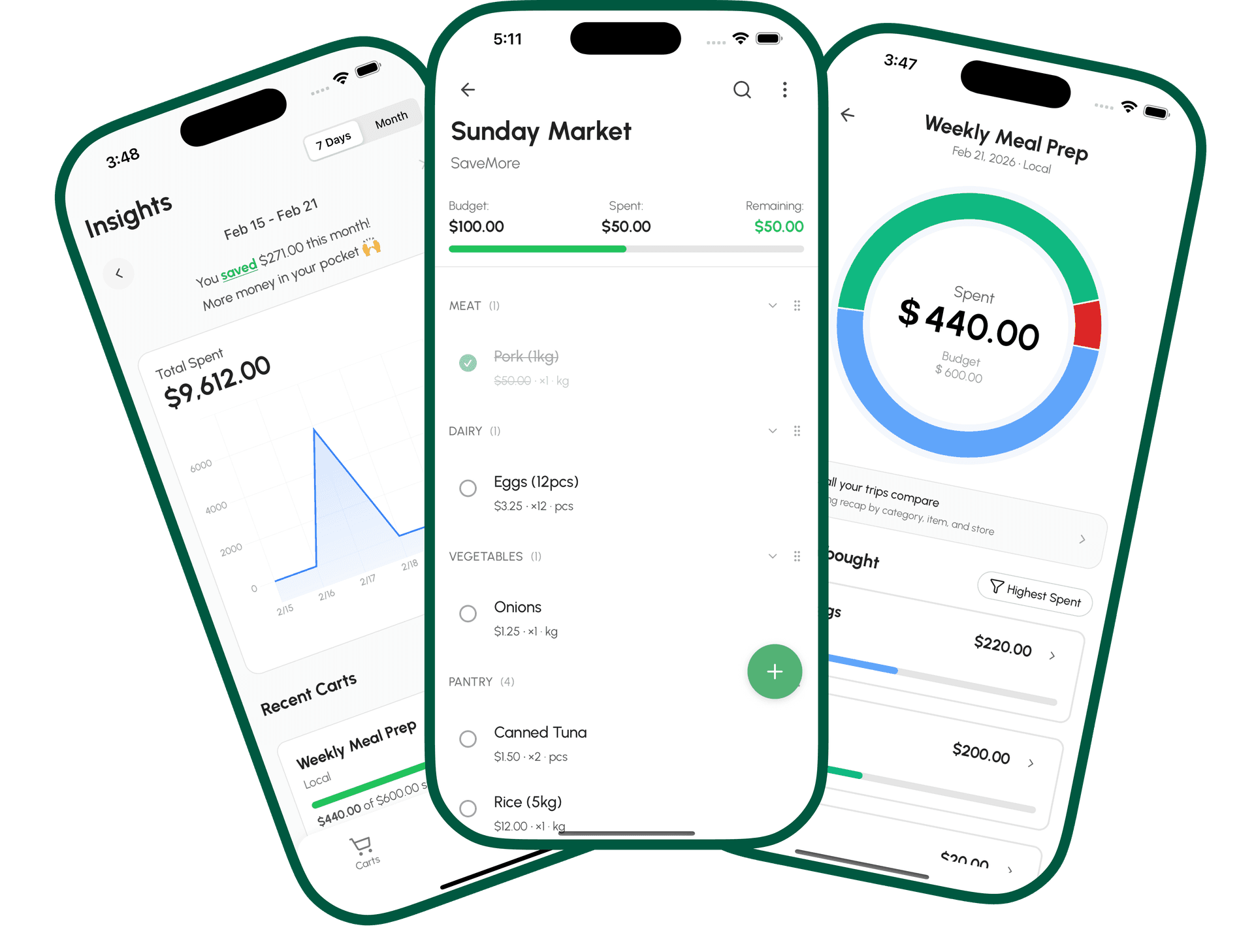
- Log each item as it goes in the cart. Name + price. Takes 5 seconds.
- Watch your running total. This is the key habit.
- When you hit 80% of your budget, stop and evaluate what's left on your list.
After you shop
- Mark the trip as done. That's it. No receipt entry, no spreadsheet. It's already tracked.
Put this advice to work on your next grocery trip
Plan your list, set a budget, and track the total while you shop.
Explore GroceryBudget features →Using your phone to track (the right way)
Your phone is already in your hand at the store. The best tracking method takes advantage of that without becoming a chore.
Here's what to look for in a tracking setup:
Speed matters most. If it takes more than 10 seconds to log an item, you'll stop doing it. The tool needs to be faster than putting the item in your cart.
A running total is non-negotiable. The whole point is seeing where you stand while you still have time to adjust.
Price suggestions save time. If you bought milk last week, your tool should remember the price so you can add it in one tap.
Offline is essential. Grocery stores are internet dead zones. Your tracking shouldn't depend on a connection.
What you'll learn after 30 days
Most people who consistently track grocery spending for a month discover a few things:
You spend more on "quick trips" than planned shopping. The $15 "just a few things" stops add up to $200/month for many families.
One category dominates your spending. It's usually snacks, drinks, or convenience items — not the staples you think cost the most.
Store choice matters more than you expected. The same basket of items can cost 15-25% more depending on where you shop.
Your actual spending is higher than your mental estimate. Almost everyone underestimates by 20-30%.
These insights only emerge when you have real data, tracked consistently, over time.
Getting started today
You don't need a perfect system. You need one that's easy enough to use on your very next grocery trip. Start with these three things:
- Set a budget before you leave the house
- Log items as you add them to the cart
- Check your total before you get in the checkout line
Do that for four trips and you'll have more insight into your grocery spending than most people get in a year. The tool doesn't matter as much as the habit — but the right tool makes the habit effortless.