Costco vs Sam's Club: Which Is Cheaper in 2026?
Sam's Club's membership is cheaper and edges Costco on packaged basics — but Costco wins on fresh quality. Here's whether either clears its membership fee.
Key Takeaways
• Sam's Club has the lower membership fee ($60 vs Costco's $65) and tends to win on packaged basics; Costco wins on fresh produce, meat, and Kirkland Signature quality.
• Unlike a regular store comparison, the membership fee itself has to be justified — it only pays off if your bulk spending is high enough to clear it.
• Bulk buying only saves money on items you'll use before they expire or spoil. Otherwise the 'discount' is money spent on food you throw away.
Compare stores using your own grocery history
Remember the prices you paid and see which store is cheaper for the items you buy.
See price history and store comparison →

Costco and Sam's Club are both warehouse clubs, which makes this comparison different from a regular grocery-store one: you're not just comparing shelf prices, you're comparing prices you can only access after paying an annual membership fee. That fee has to be justified before the per-item savings mean anything.
Membership Costs (2026)
| Membership | Costco | Sam's Club |
|---|---|---|
| Base tier | $65/year (Gold Star) | $60/year (Club) |
| Premium tier | $130/year (Executive, 2% cashback) | $120/year (Plus) |
Sam's Club is cheaper at both tiers — about 8% less on the base membership.
Common Item Price Ranges (National Averages, 2026)
| Item | Costco | Sam's Club |
|---|---|---|
| Rotisserie chicken (~3 lb) | ~$4.99 | ~$4.98 |
| Eggs, 5-dozen tray | $7.99–$8.99 | $7.49–$8.49 |
| Paper towels, 12-roll | $19.99–$22.99 | $17.99–$20.99 |
| Toilet paper, 30-roll | $21.99–$24.99 | $19.99–$22.99 |
| Olive oil, 2L | $14.99–$16.99 | $13.99–$15.99 |
| Ground beef, 80/20, 3lb pack | $14.99–$16.49 | $15.49–$16.99 |
| Chicken breast, boneless, 3lb+ pack | $9.99–$11.99 | $10.49–$12.49 |
| Frozen berries, 3lb bag | $9.99–$11.99 | $9.49–$11.49 |
| Bottled water, 40-pack | $4.99–$5.99 | $4.49–$5.49 |
| Kirkland Signature / Member's Mark pantry staples | Generally competitive, brand-dependent | Generally competitive, brand-dependent |
National ranges — regional pricing and warehouse-specific promotions vary. Per-item gaps between the two are usually small; the chicken price gap above (one cent) is a good example of how close they typically run.
Where Costco Wins
Fresh quality. Costco is widely regarded as stronger on produce, meat, and bakery — the private-label Kirkland Signature line has a strong reputation for quality relative to price.
Executive membership cashback. The $130 Executive tier returns 2% cashback on purchases, which can offset or exceed the fee difference for heavy, regular shoppers.
Specialty and premium items. Costco tends to stock a wider range of premium and specialty products than Sam's Club.
Compare stores using your own grocery history
Remember the prices you paid and see which store is cheaper for the items you buy.
See price history and store comparison →Where Sam's Club Wins
Lower membership fee. $60 vs $65 at the base tier, $120 vs $130 at the premium tier — a small but real gap before you've bought anything.
Packaged basics and name brands. Sam's Club tends to price name-brand packaged goods, paper products, and pharmacy items slightly below Costco.
Instant savings promotions. Sam's Club's rotating instant-savings discounts frequently undercut Costco's everyday shelf price on the same item.
The Real Factor: Does Your Spending Clear the Fee?
This comparison works differently from Aldi vs Walmart or Walmart vs Kroger, because there's an upfront cost before you save a cent. Two things have to both be true for a warehouse club to actually save you money:
- You spend enough there to clear the membership fee. Roughly: if you're spending $100+/month at Costco, the $65 fee pays for itself in 3-4 months through the price gap alone. Below that, you may be paying $65-130/year for access to savings you're not capturing.
- You can use bulk quantities before they spoil or expire. A 5-dozen egg tray or a 3lb pack of ground beef is only a deal if you'll eat it — food that gets thrown out erases the bulk discount entirely. Smaller households often can't use warehouse quantities fast enough on perishables, even when the per-unit price is lower.
If both are true, warehouse clubs are a real saving. If either isn't, a regular grocery store — or a discount grocer like Aldi — often works out cheaper once you account for the fee and the waste.
A Split-Store Strategy
- Use a warehouse club for genuine bulk non-perishables and proteins you'll actually finish. Paper goods, olive oil, frozen meat you'll use within its freezer life, pantry staples.
- Use a regular grocery store or discount grocer for perishables and top-ups. Produce in quantities you'll actually eat, dairy, anything you buy in small amounts.
- Track prices on your regular items across both. The averages above are a starting point — your own numbers, including whether you're actually using the bulk quantities, are what determine if the membership is worth it for you specifically.
Tracking Prices Across Both Stores
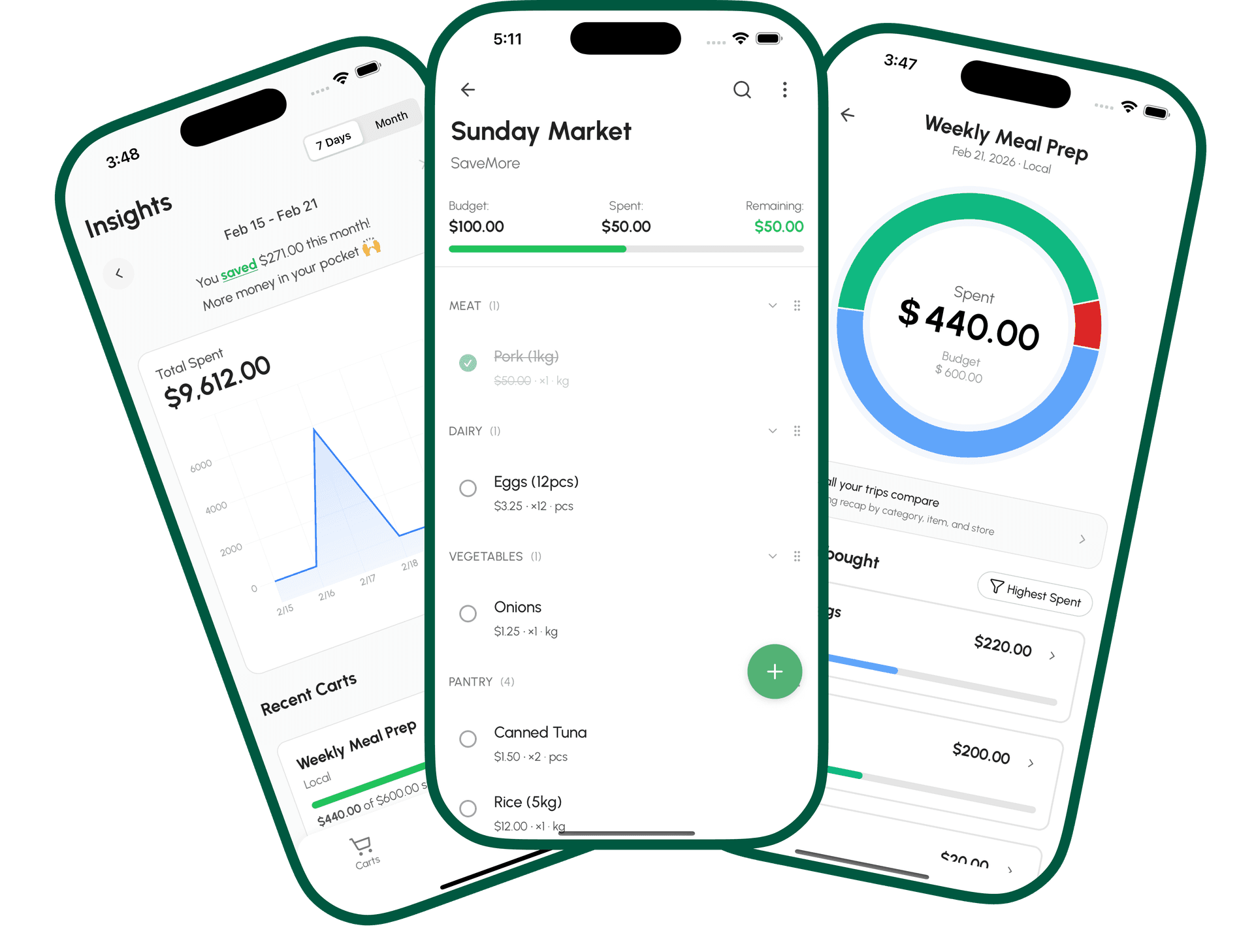
GroceryBudget's price memory feature records what you paid for each item at each store — so you can see whether your warehouse club trips are actually beating your regular grocery store on the items you buy, not just assume it because the label says "bulk."
The app works fully offline, tracks your running total in real time as you shop, and doesn't require an account to start.
Download GroceryBudget on iOS or Android — free, no account required.
---
Related: Compare grocery prices across stores, including bulk buying — the general framework this post applies to warehouse clubs specifically. Walmart vs Aldi and Walmart vs Kroger — how the non-membership options compare.
More US price comparisons: Aldi vs Lidl · Target vs Walmart · Trader Joe's vs Whole Foods
Frequently Asked Questions
Is Costco or Sam's Club cheaper?+
Sam's Club's membership costs less ($60 vs Costco's $65 for the base tier) and it tends to edge out Costco on packaged, name-brand basics. Costco is generally considered stronger on fresh produce, meat, and its Kirkland Signature private label. Per-item price differences are usually small — the membership fee and how much you actually shop there matter more.
Is a Costco or Sam's Club membership worth it?+
Only if your spending clears the fee. As a rough guide, spending $100+/month at Costco pays back a $65 membership in about 3-4 months. Below that, or if you don't have storage space and household size to use bulk quantities before they spoil, a regular grocery store may work out cheaper overall.
What's cheaper to buy in bulk, Costco or Sam's Club?+
Sam's Club generally has a slight edge on paper goods, pharmacy items, and packaged name-brand basics. Costco tends to win on bulk meat, produce, and its Kirkland Signature line. The gap on any single item is usually small — the bigger factor is whether you'll use the bulk quantity before it expires.