Walmart vs Kroger: Which Is Cheaper for Groceries in 2026?
Walmart usually wins on sticker price for packaged staples. Kroger wins on fresh and organic, and its loyalty program can flip the math. Full breakdown here.
Key Takeaways
• Walmart tends to run 5–15% cheaper on packaged store-brand basics — cereal, pasta, canned goods, peanut butter.
• Kroger wins on fresh categories (produce, meat, bakery) and its Simple Truth organic line, which runs 10–20% below Walmart's organic equivalents.
• Kroger's loyalty stack — digital coupons plus fuel points — can add real savings, but only if you actually use them. Skip the coupon-clipping and Walmart's sticker price usually wins outright.
Compare stores using your own grocery history
Remember the prices you paid and see which store is cheaper for the items you buy.
See price history and store comparison →

Walmart and Kroger get compared constantly because they're both trying to be the default grocery store for budget-conscious American households — but they compete on different terms. Walmart's edge is everyday low pricing at scale. Kroger's edge is fresh-food quality plus a loyalty program that rewards shoppers who actually use it.
That second part matters more than people expect. Kroger's real price advantage is conditional in a way Walmart's isn't.
How Walmart and Kroger Are Positioned
Walmart runs on an "everyday low price" model — broad selection, aggressive buying power, and pricing that doesn't rely on you clipping anything. What you see on the shelf is what you pay, whether it's your first visit or your hundredth.
Kroger is a pure grocery chain (plus fuel stations in most locations) with a stronger fresh-food supply chain — Consumer Reports and Kiplinger's both consistently rank Kroger's produce, meat, and bakery above Walmart's. Kroger also runs the Kroger Plus loyalty card, stacking digital coupons with fuel points that discount gas per gallon based on grocery spend. Its Simple Truth private-label line covers organic and natural products at prices that undercut Walmart's organic aisle.
Common Item Price Ranges (National Averages, 2026)
| Item | Walmart | Kroger |
|---|---|---|
| Whole milk, 1 gallon | $2.76–$3.65 | $3.00–$3.49 |
| Eggs, 1 dozen (large) | $1.70–$2.50 | $1.29–$2.10 |
| Bread, store-brand loaf | $2.50–$3.20 | $2.20–$2.99 |
| Bananas, per lb | $0.54–$0.58 | $0.56–$0.62 |
| Chicken breast, boneless, per lb | $3.24–$3.98 | $3.49–$4.29 |
| Ground beef 80/20, per lb | $4.98–$5.48 | $5.29–$5.99 |
| Peanut butter, 16oz (store brand) | $2.48–$2.98 | $2.79–$3.29 |
| Pasta, 16oz box (store brand) | $1.00–$1.28 | $1.15–$1.49 |
| Canned black beans, 15oz | $0.82–$0.98 | $0.89–$1.09 |
| Organic milk, half gallon | $3.98–$4.49 | $3.29–$3.79 (Simple Truth) |
National ranges — regional pricing and weekly promotions vary significantly. Kroger prices reflect shelf price, not additional digital-coupon or fuel-point discounts.
Where Walmart Wins
Packaged store-brand basics. Great Value cereal, pasta, canned goods, rice, and peanut butter tend to run 5–15% below Kroger's equivalent store brand. This is Walmart's core strength — scale pricing on shelf-stable goods.
No loyalty program required. The price you see is the price you pay. There's no app to open, no coupon to clip, no points to track.
One-stop convenience. Household goods, pharmacy, and electronics alongside groceries, in the same trip.
Compare stores using your own grocery history
Remember the prices you paid and see which store is cheaper for the items you buy.
See price history and store comparison →Where Kroger Wins
Fresh categories. Produce, meat, and bakery are where Kroger consistently outperforms Walmart on both quality and price, according to independent rankings from Consumer Reports and Kiplinger's.
Organic and Simple Truth. Kroger's organic private label runs 10–20% cheaper than Walmart's organic aisle on most comparable items — organic milk, eggs, and produce included.
Eggs, often. Multiple 2026 comparisons show Kroger pricing standard eggs below Walmart, sometimes by 15–20 cents a dozen.
The loyalty stack — conditionally. Digital coupons plus fuel points can add up to real savings, commonly cited around $35–50/month for a household spending roughly $200/month at Kroger. That's the swing factor in this whole comparison.
The Real Factor Isn't the Chain, It's Whether You Use the Loyalty Program
This is where Walmart vs Kroger differs from most store comparisons: the "cheaper" answer isn't fixed, it depends on shopper behavior. Kroger's headline savings assume you're clipping digital coupons weekly and redeeming fuel points at the pump. If you do that consistently, Kroger can beat Walmart's sticker price outright. If you don't — if you're just walking in and buying at shelf price — you're leaving Kroger's actual advantage on the table, and Walmart's everyday-low pricing wins by default.
So the honest framing is: Kroger rewards engaged shoppers. Walmart rewards shoppers who don't want to think about it.
A Split-Store Strategy
- Use Walmart for packaged pantry restocks. Cereal, pasta, canned goods, paper products — items where Walmart's scale pricing is the most reliable win.
- Use Kroger for fresh and organic. Produce, meat, bakery, and Simple Truth organic — and actually engage with the app for digital coupons and fuel points, or you're not getting Kroger's real price.
- Track prices on your own regular items. The national averages above are a starting point, not your answer — your nearest Kroger's weekly digital deals and your nearest Walmart's shelf price are what actually matter.
Tracking Prices Across Both Stores
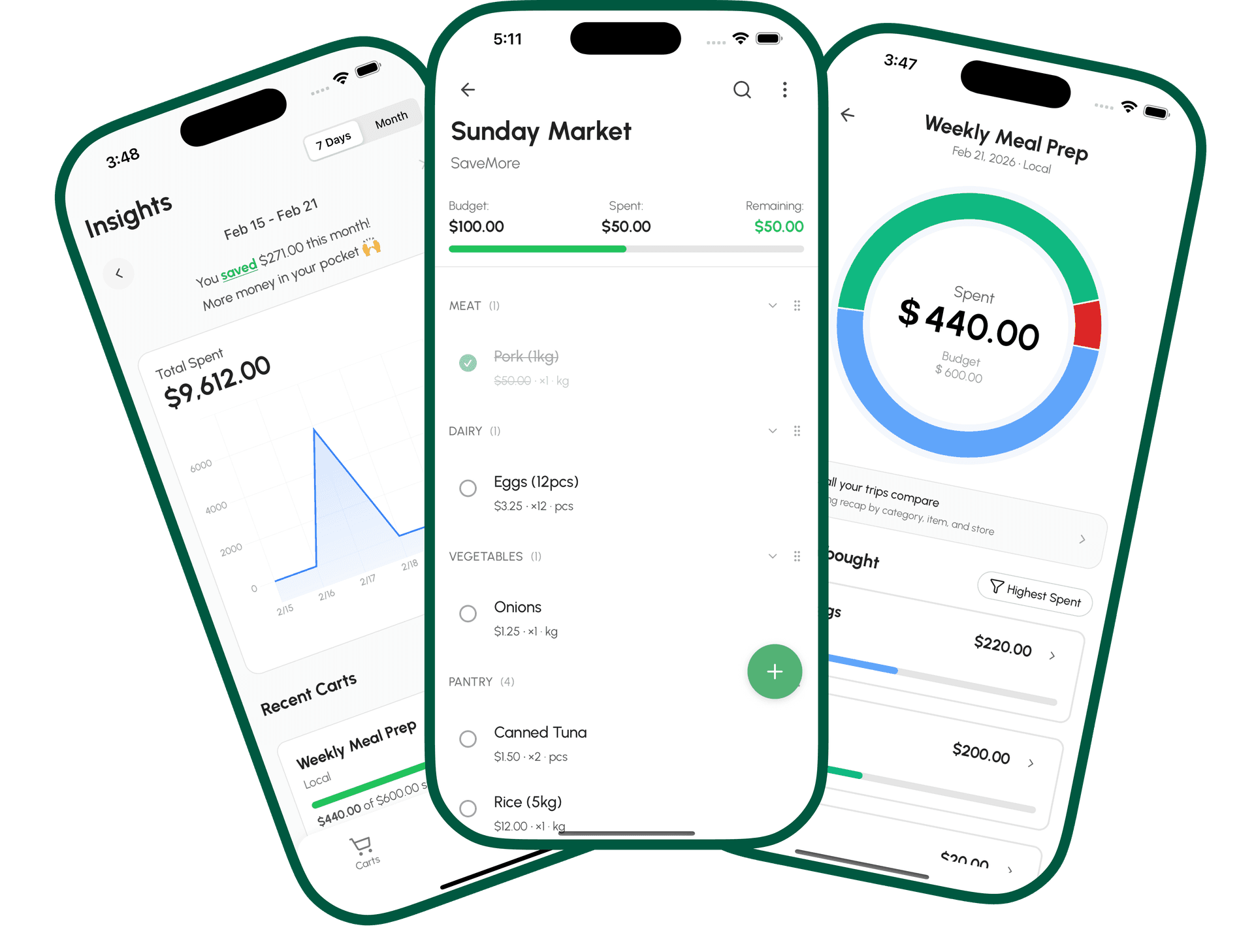
GroceryBudget's price memory feature records what you actually paid for each item at each store — including whether a Kroger digital coupon was applied. Add "chicken breast" at Walmart with the price, then the same item at Kroger after a coupon. After a few trips to each, you'll know your real numbers instead of a national average.
The app works fully offline, tracks your running total in real time as you shop, and doesn't require an account to start.
Download GroceryBudget on iOS or Android — free, no account required.
---
Related: Walmart vs Aldi — how the discount-grocer comparison stacks up instead. Costco vs Sam's Club — whether a warehouse club membership beats both. And how much to spend on groceries per month in 2026 — USDA benchmarks by household size.
More US price comparisons: Aldi vs Lidl · Target vs Walmart · Trader Joe's vs Whole Foods
Frequently Asked Questions
Is Kroger cheaper than Walmart?+
It depends on what you're buying and whether you use Kroger's loyalty program. On packaged store-brand basics, Walmart is usually 5–15% cheaper. On fresh produce, meat, and organic items, Kroger tends to win. Add in Kroger's digital coupons and fuel points, and an engaged shopper can come out ahead there overall.
What is Kroger cheaper on than Walmart?+
Fresh categories — produce, meat, and bakery — and Kroger's Simple Truth organic line, which regularly beats Walmart's organic prices by 10–20%. Eggs are also frequently cheaper at Kroger, especially with a digital coupon applied.
Does Kroger's loyalty program actually save money?+
Yes, if you use it consistently. Digital coupons and fuel points can add up to $35–50/month in savings for a household spending around $200/month at Kroger. If you don't clip coupons or redeem fuel points, you're just paying Kroger's non-discounted price, and Walmart's everyday-low pricing usually wins instead.