Walmart vs Aldi: Which Is Cheaper for Groceries in 2026?
Aldi beats Walmart on price for most staples, but not everything, and the gap is smaller than viral posts claim. Here's the real item-by-item breakdown.
Key Takeaways
• Aldi runs roughly 10–15% cheaper overall, mainly on private-label staples like milk, bread, and canned goods.
• Walmart occasionally undercuts Aldi on specific items (eggs are a common example) and wins outright on selection and one-stop convenience.
• The households saving the most don't pick one store exclusively — they use Aldi for the staple run and Walmart for everything else.
Compare stores using your own grocery history
Remember the prices you paid and see which store is cheaper for the items you buy.
See price history and store comparison →

"Aldi vs Walmart" is one of the most-searched grocery price questions in the US, and for good reason — both are positioned as the budget option, but they get there differently. Walmart competes on scale and selection. Aldi competes by not carrying most of what Walmart carries.
That difference in model is what actually decides which one is cheaper for you — not the chain name on the sign.
How Walmart and Aldi Are Positioned
Walmart runs supercenters stocking tens of thousands of SKUs — national brands, store brands, household goods, pharmacy, electronics, and a full grocery section, all under one roof. Its grocery pricing is competitive because of sheer purchasing volume, and most locations now offer pickup and delivery.
Aldi runs small-format stores — a fraction of a Walmart Supercenter's footprint — carrying around 1,400–2,100 items instead of tens of thousands. About 90% of that is Aldi's own private label. Fewer SKUs means less shelving, less labor, less shrink, and no national-brand markup to pass on. Aldi also skips loyalty programs and rotates limited-time "Aldi Finds" specials instead.
Common Item Price Ranges (National Averages, 2026)
| Item | Aldi | Walmart |
|---|---|---|
| Whole milk, 1 gallon | $2.85–$3.10 | $2.76–$3.65 |
| Eggs, 1 dozen (large) | $1.85–$2.25 | $1.70–$2.50 |
| Bread, multigrain loaf | $1.95–$2.99 | $2.50–$4.68 |
| Bananas, per lb | $0.44–$0.49 | $0.54–$0.58 |
| Chicken breast, boneless, per lb | $2.79–$3.49 | $3.24–$3.98 |
| Ground beef 80/20, per lb | $4.49–$4.99 | $4.98–$5.48 |
| Peanut butter, 16oz | $1.89–$2.29 | $2.48–$2.98 |
| Pasta, 16oz box | $0.85–$0.99 | $1.00–$1.28 |
| Canned black beans, 15oz | $0.65–$0.79 | $0.82–$0.98 |
| Frozen pizza (store brand) | $3.49–$3.99 | $3.98–$4.48 |
National ranges — regional and seasonal pricing varies significantly. These are typical figures, not guaranteed prices at your local store.
Where Aldi Wins
Private-label staples. Milk, bread, oats, canned goods, and pasta are where Aldi's private-label model shows up most consistently — often 20–30% below the equivalent national brand.
Produce, when it's in the weekly rotation. Aldi's rotating specials frequently undercut Walmart on seasonal fruit and vegetables, though selection is narrower and less predictable week to week.
Overall basket total. Across multiple full-basket comparisons run in 2026, Aldi came out 10–15% cheaper than Walmart on a like-for-like list. On a household spending $500/month on groceries, that's roughly $50–$75/month.
Compare stores using your own grocery history
Remember the prices you paid and see which store is cheaper for the items you buy.
See price history and store comparison →Where Walmart Wins
Specific items, sometimes. Eggs are the most commonly cited example — Walmart's Great Value eggs have matched or undercut Aldi's in several 2026 comparisons. Price leadership isn't universal across every SKU.
Selection. Aldi simply doesn't carry most national brands, specialty items, household goods, or pharmacy products. If your list includes brand-specific items or anything outside groceries, Walmart is a one-stop trip; Aldi isn't.
Convenience infrastructure. Walmart's pickup and delivery network is more mature and available in more areas. For households where time matters more than a 10% grocery discount, that's a real factor.
The Real Factor Isn't the Chain, It's Your Basket
The comparisons above assume a fairly standard basket of staples. If your list leans heavily toward name-brand products, specialty items, or household goods, Aldi's price advantage shrinks fast — it may not carry half of what you buy. If your list is mostly staples (milk, eggs, bread, produce, basic proteins, canned goods), Aldi's advantage is close to its maximum.
The useful question isn't "which store is cheaper nationally" — it's "which store is cheaper for the 20–30 items I actually buy every week." That's only answered by tracking your own prices.
A Split-Store Strategy
For most budget-conscious households, the practical approach is:
- Use Aldi for the weekly staple run. Milk, eggs, bread, produce, pasta, canned goods — the categories where its private-label pricing consistently wins.
- Use Walmart for brand-specific items and everything else. Household goods, specialty products, pharmacy, or anything Aldi doesn't stock.
- Track prices on your regular items. After a few trips to each store, you'll know your actual numbers instead of relying on a national average.
Tracking Prices Across Both Stores
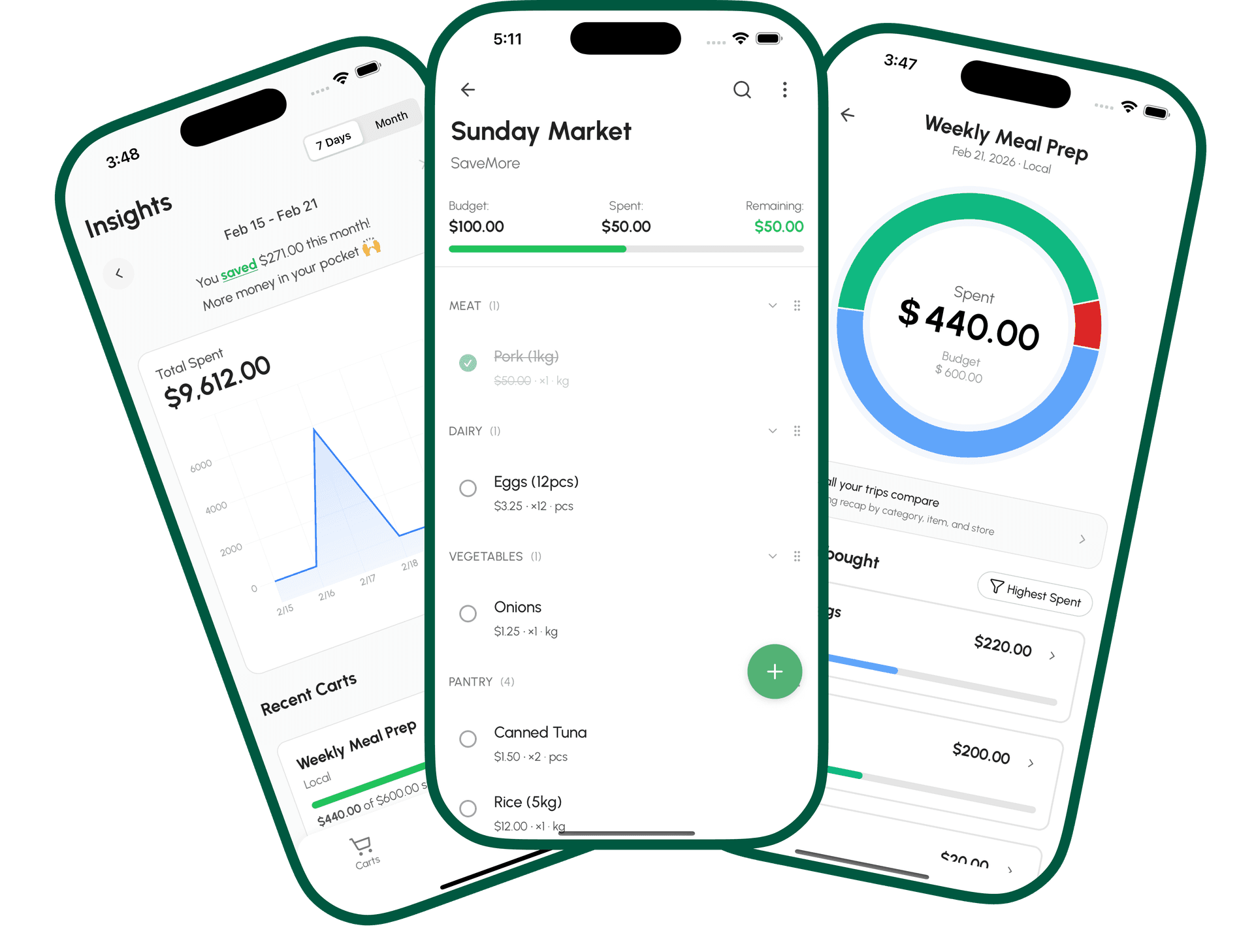
GroceryBudget's price memory feature records what you paid for each item at each store. Add "whole milk" at Aldi with the price — it's remembered. Do the same at Walmart. After a few trips to each, you can compare what you actually paid, not what a national comparison estimated.
The app works fully offline, tracks your running total in real time as you shop, and doesn't require an account to start.
Download GroceryBudget on iOS or Android — free, no account required.
---
Related: Walmart vs Kroger — how the full-service comparison stacks up instead. Costco vs Sam's Club — whether a warehouse club membership beats both. How much to spend on groceries per month in 2026 — USDA benchmarks by household size. And why you keep overspending on groceries — the visibility problem store-hopping alone won't fix.
More US price comparisons: Aldi vs Lidl · Target vs Walmart · Trader Joe's vs Whole Foods
Frequently Asked Questions
Is Aldi actually cheaper than Walmart?+
Usually, yes. On items both stores carry, Aldi tends to run about 10–15% cheaper overall, mainly because roughly 90% of what it sells is private-label. It's not universal, though — Walmart has matched or beaten Aldi on specific items like eggs in recent comparisons.
What is Aldi cheaper on than Walmart?+
Aldi's biggest advantage is private-label staples: milk, bread, oats, canned goods, and rotating produce specials. These are the categories where the private-label discount shows up most consistently.
What does Walmart do better than Aldi?+
Selection and convenience. Walmart carries national brands, household goods, pharmacy items, and electronics that Aldi doesn't stock at all, plus more mature pickup and delivery infrastructure. If you need everything in one trip, Walmart wins on time even when Aldi wins on price per item.