Why You Keep Overspending on Groceries
Most people overspend on groceries not because they buy too much, but because they can't see their running total while shopping. Here's the actual fix.
Key Takeaways
• The real reason most people go over their grocery budget every week.
• Why apps that track spending after the fact don't solve the problem.
• What real-time budget tracking during a grocery trip looks like.
Put this advice to work on your next grocery trip
Plan your list, set a budget, and track the total while you shop.
Explore GroceryBudget features →

If you've set a grocery budget and still go over it most weeks, you're not bad at math and you're not undisciplined. You're missing information at the moment it would actually help you.
The average American household spent over $475/month on groceries in 2025 — and most of them had a budget. The budget didn't fail because it was wrong. It failed because it was invisible while they were shopping.
The Visibility Problem
Here's what actually happens on a typical grocery trip:
You leave home with a budget in mind — say, $150 for the week. You shop normally, putting things in the cart as you go. You reach the register, the total comes up: $187. You're $37 over.
At that point, you have two options: put things back (embarrassing, slow) or pay it and try harder next week. Most people pay it. This repeats weekly.
The problem isn't the budget. It's that you had no idea you were at $140 when you were still in the frozen aisle. If you'd known you were $10 from your limit with half the store left to walk, you would have made different choices right there.
Why Most Budget Tracking Methods Don't Help
Budgeting apps (YNAB, Mint, etc.): These sync your bank transactions after the fact. They tell you that you overspent on groceries — helpful for understanding patterns, useless for preventing the overage on this trip. By the time the transaction posts, it's done.
Spreadsheets: You have to type every item and price manually. In a moving grocery store, on a phone, while navigating a cart, this is too slow. Most people give up within a few trips.
Mental math: Works fine for simple trips. Breaks down when you have 30+ items across multiple categories and need to track running totals for fresh produce, meats, dry goods, and household items simultaneously.
Shopping lists: Helpful for not forgetting things. Completely silent on what those things cost and whether you're within budget.
What Actually Works: Real-Time Tracking While You Shop
The only solution that reliably prevents grocery overspending is knowing your running total in real time — before you reach the register, while you can still make different choices.
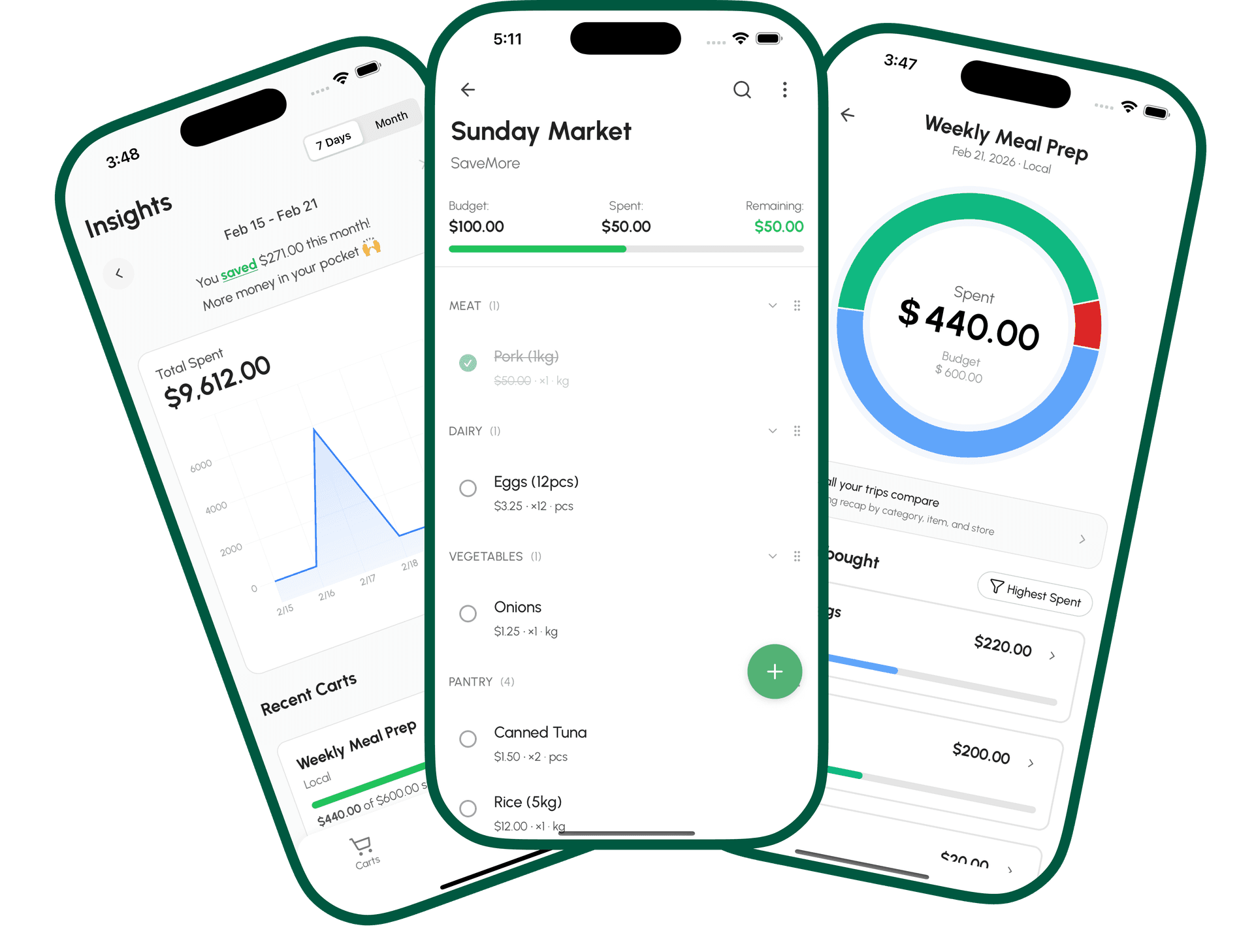
GroceryBudget is built specifically around this. You set a budget for the trip before you leave. As you add items to your cart in the app, your running total updates immediately. A budget bar shows how much room you have left.
When you're approaching your limit, it's visible. You can decide: skip the ice cream this week, swap the brand-name crackers for the store brand, or choose the smaller cut of meat. These decisions happen naturally when you have the information in the moment.
Without the information, you're just guessing until checkout.
Put this advice to work on your next grocery trip
Plan your list, set a budget, and track the total while you shop.
Explore GroceryBudget features →The Role of Price Memory
Most people don't realize how repetitive their grocery shopping is. The same 40–60 items appear on most of their lists, at roughly the same prices from week to week. Once you've bought chicken breasts at $4.99/lb, you shouldn't have to enter that price again.
GroceryBudget remembers the price of every item you buy. On subsequent trips, prices are pre-filled from your purchase history. You only update them when prices change. This makes real-time tracking fast — instead of typing full item names and prices every time, you're tapping or speaking a quick update to pre-filled entries.
The First Three Trips
Changing a grocery habit takes a few rounds before it feels natural. Here's what the first few trips with a real-time tracker typically look like:
Trip 1: You enter prices as you go, some are slow to add, you learn how the app works. Might still be slightly over budget.
Trip 2: Prices from last week are remembered. Entry is faster. You notice the budget bar for the first time in the moment it matters — and you put something back.
Trip 3: The process is automatic. You know your limits going in, the app fills in most prices, and you finish the trip under budget without stress.
Most people who stick through the first two trips report that the third one feels significantly different. The visibility creates the behavior change, not willpower.
Getting Started
GroceryBudget is free to download on iOS and Android. You don't need an account to start — create a cart, set a budget, and begin your next trip. No bank account linking, no subscription required to use the core features.
Download GroceryBudget — free, offline, no account needed.
---
Also useful: How much to spend on groceries per month in 2026 — USDA benchmarks by family size. Grocery budget for couples — shared visibility tips for two-person households. Average grocery cost for a family of 3 — benchmarks and why three-person households overspend. And best grocery budget apps 2026 if you're still deciding which app to use.