Target vs Walmart: Which Is Cheaper for Groceries in 2026?
Walmart wins the grocery basket by roughly 6-10%, but Target closes most of the gap with RedCard and Circle. Here's the item-by-item breakdown.
Key Takeaways
• Walmart runs roughly 6-10% cheaper on a straight grocery basket, with the widest gaps on meat and pantry staples.
• Target's 5% RedCard discount plus Circle offers closes most of that gap for shoppers who use both consistently.
• Target's Good & Gather private label is competitive with Walmart's Great Value on price and generally rated better on quality.
Compare stores using your own grocery history
Remember the prices you paid and see which store is cheaper for the items you buy.
See price history and store comparison →

Target and Walmart both sell groceries alongside everything else, but they are not really competing for the same trip. Walmart is built to be your primary grocery store. Target is built to sell you groceries while you are there for something else.
That difference shows up in the prices, and in the loyalty programs designed to offset them.
The Staples Basket
| Item | Walmart | Target |
|---|---|---|
| Whole milk, 1 gallon | $2.76–$3.65 | $3.49–$3.89 |
| Eggs, 1 dozen (large) | $1.70–$2.50 | $2.09–$2.79 |
| Bread, multigrain loaf | $2.50–$4.68 | $2.79–$4.49 |
| Bananas, per lb | $0.54–$0.58 | $0.59–$0.65 |
| Chicken breast, boneless, per lb | $3.24–$3.98 | $3.79–$4.49 |
| Ground beef 80/20, per lb | $4.98–$5.48 | $5.29–$5.99 |
| Peanut butter, 16oz | $2.48–$2.98 | $2.59–$3.19 |
| Pasta, 16oz box | $1.00–$1.28 | $1.09–$1.39 |
| Canned black beans, 15oz | $0.82–$0.98 | $0.89–$1.09 |
| Frozen pizza (store brand) | $3.98–$4.48 | $4.29–$4.99 |
Typical 2026 ranges. Regional pricing applies, and both chains price-adjust by market.
Walmart is cheaper on every line. Total the basket and the gap runs about 6–10%, with meat showing the widest spread.
Where Target Closes the Gap
The shelf price is not the final price for a Target regular.
RedCard: 5% off. It applies to groceries. On a $150 weekly run that is $7.50 a trip, roughly $390 a year. That alone covers most of the 6–10% gap.
Circle offers. Free to join, and the grocery category regularly carries 5–20% off specific items plus periodic gift-card promotions on categories like frozen or household.
Stacking. RedCard and Circle stack. A Circle-discounted item bought on a RedCard is frequently cheaper at Target than the same item at Walmart.
The catch is consistency. These savings require actually using the programs on every trip. A shopper who signs up and forgets pays the full 6–10% premium.
Good & Gather vs Great Value
Target's private label is the more interesting comparison, because private label is where both chains make their margin and where most budget shoppers should be buying.
| Private label | Great Value (Walmart) | Good & Gather (Target) |
|---|---|---|
| Price position | A few cents cheaper | Near parity |
| Range | Very broad, including household | Broad on food, thinner on household |
| Quality reputation | Adequate, inconsistent by category | Generally rated higher, especially dairy and frozen |
On a private-label basket the price difference narrows to near nothing. At that point it is a quality preference, and Good & Gather generally wins that one.
Compare stores using your own grocery history
Remember the prices you paid and see which store is cheaper for the items you buy.
See price history and store comparison →Where Walmart Wins Outright
- Meat. The widest gap in the basket, and Walmart carries a fuller fresh selection.
- Produce volume. Bigger sections, more variety, better pricing on staples.
- One-stop completeness. Pharmacy, auto, full household range, deeper national brands.
- Grocery pickup maturity. More slots, more locations, longer operating history.
If groceries are your reason for the trip, Walmart is the better default.
Where Target Wins
- Prepared and specialty foods, where Good & Gather and Favorite Day outclass the Walmart equivalents
- Store experience, which matters more than budget guides admit, since a faster and less stressful trip is a trip you actually finish
- Combined trips, where you were going for household goods anyway and grabbing groceries costs no extra time
The Practical Answer
- Groceries as the main trip: Walmart, unless you hold a RedCard and use Circle consistently.
- Groceries as an add-on: Target, since the 6–10% premium on a partial basket is smaller than a second trip costs you in time and fuel.
- If you shop Target anyway, get the RedCard. It is the single change that makes Target price-competitive.
Which Is Actually Cheaper for Your Basket
Chain-level averages hide a lot. A household buying mostly meat and produce sees Walmart's full 10% advantage. A household buying mostly private-label pantry and frozen sees almost no difference, and a RedCard flips it.
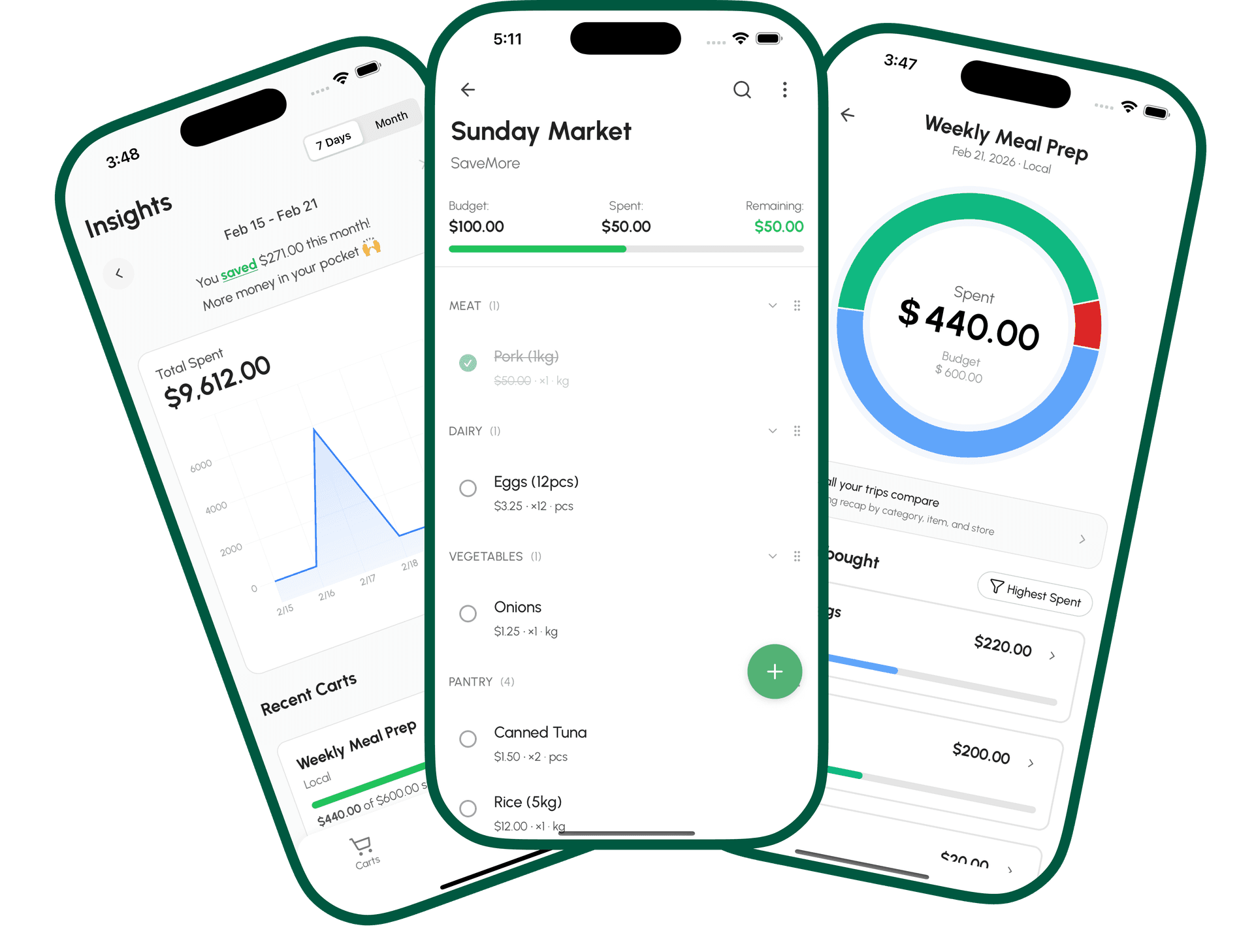
GroceryBudget answers it with your own numbers instead of averages. Its price memory records what you paid for each item at each store, and its store comparison shows where your money actually goes further, for the things you actually buy.
The app tracks your running total against your budget while you shop, works offline, and is free to start with no account required.
Download GroceryBudget — free, offline, tracks your total as you shop.
Also available on Android: Google Play.
---
More US price comparisons: Walmart vs Kroger · Walmart vs Aldi · Aldi vs Lidl · Costco vs Sam's Club · Trader Joe's vs Whole Foods
Frequently Asked Questions
Is Target or Walmart cheaper for groceries?+
Walmart is cheaper on a straight price comparison, typically by 6 to 10 percent on an overlapping basket. The gap is widest on meat, produce, and pantry staples. Target narrows it substantially for shoppers using the 5 percent RedCard discount and Circle offers.
Is Good & Gather cheaper than Great Value?+
They are close. Great Value is usually a few cents cheaper per item, but Good & Gather is generally rated higher on quality, particularly on dairy, frozen, and prepared foods. On a private-label basket the price difference is small enough that quality preference reasonably decides it.
Does the Target RedCard actually save money on groceries?+
Yes, 5 percent off nearly everything including groceries. On a $150 weekly grocery run that is $7.50 per trip, or roughly $390 a year, which is enough to erase most of Walmart's price advantage for a household that shops Target consistently.
Which has better grocery selection, Target or Walmart?+
Walmart, clearly. It carries a full supermarket range including a butcher counter, larger produce sections, pharmacy, and a deeper national-brand assortment. Target's grocery section is smaller and skews toward prepared foods, snacks, and private label.