USDA Thrifty Food Plan 2026: How Much Groceries Should Cost
The USDA sets a monthly grocery benchmark at four levels, Thrifty to Liberal. See 2026 numbers for singles, couples, and families, then check yours free.
Key Takeaways
• The USDA's four food plans set monthly grocery benchmarks from Thrifty (lowest) to Liberal (highest).
• A family of four runs roughly $990/month on the Thrifty plan and $1,900+ on the Liberal plan in 2026.
• The benchmark only helps if you know your own number — track a month of spending, then compare.
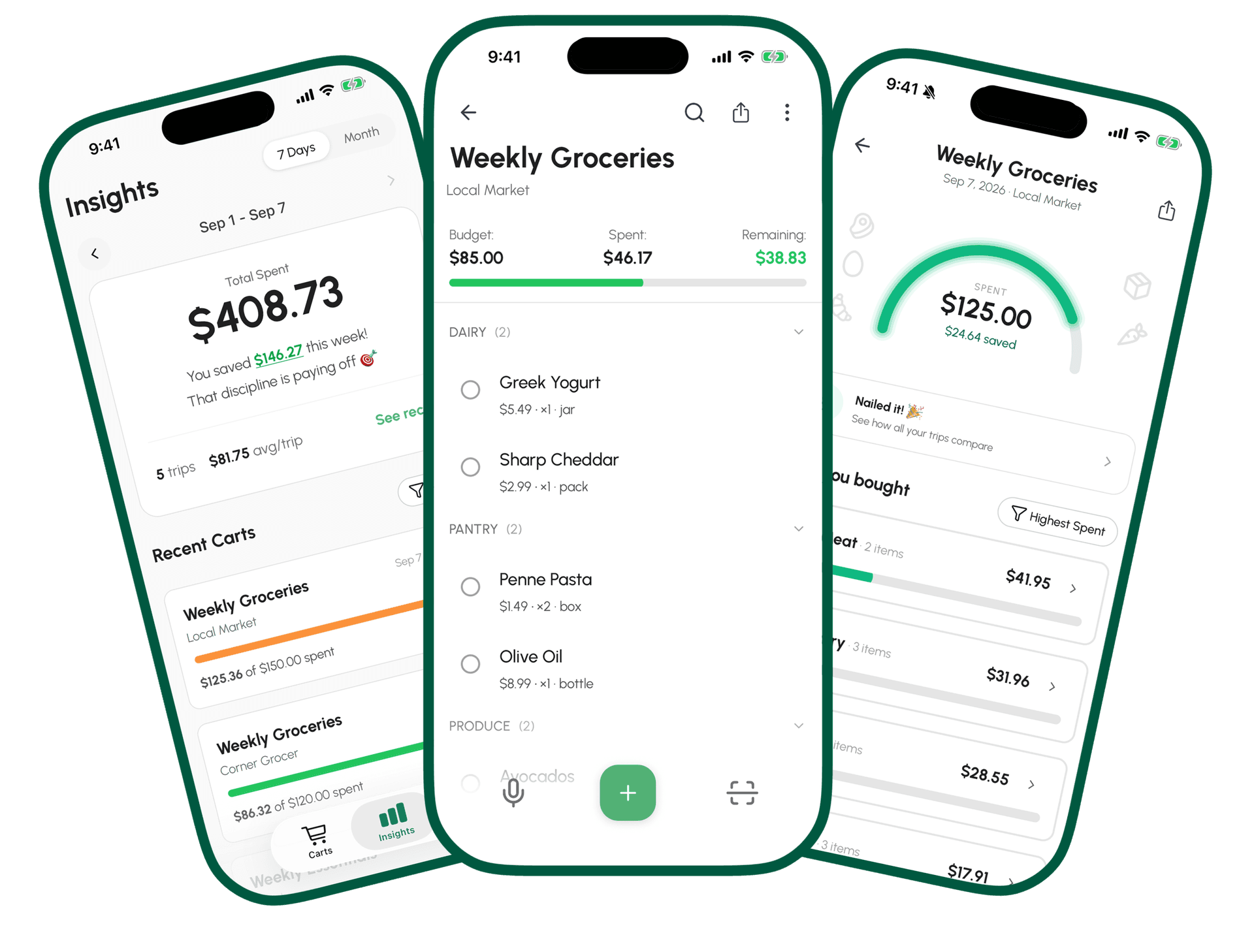
Turn the USDA benchmark into a live grocery budget
Set your trip budget, add items as you shop, and see what remains before checkout.
See live cart tracking →

Last updated: June 2026. Every month the USDA publishes the Official USDA Food Plans: Cost of Food at Home, the closest thing America has to an official answer for "how much should I spend on groceries?" The figures below reflect early-2026 reports and are adjusted monthly for inflation using the Consumer Price Index, so the exact dollar moves a little each month — but the ranges hold.
What the USDA Food Plans Actually Measure
The USDA produces four food plans at increasing cost levels. All four assume every meal is prepared at home from scratch and meets federal nutrition guidelines. The difference between them is how much room you have for convenience, variety, and premium ingredients.
- Thrifty Plan — the lowest cost that still meets nutrition standards. It's the basis for SNAP (food stamp) benefit amounts. Sustaining it takes real meal planning, bulk buying, and almost no food waste.
- Low-Cost Plan — modest flexibility. Most of what you need without agonizing over every item, but no room for premium brands.
- Moderate-Cost Plan — comfortable. Some convenience foods, more variety, occasional premium choices.
- Liberal Plan — generous. Premium ingredients, convenience foods, and minimal constraint.
2026 Monthly Cost by Household Size
These are approximate monthly figures for 2026, drawn from recent USDA reports. The reference family is two adults aged 19–50 plus two children; single and couple figures include the USDA's standard household-size adjustment (small households pay more per person).
Single Adult (19–50)
| Plan | Female | Male |
|---|---|---|
| Thrifty | ~$295 | ~$360 |
| Low-Cost | ~$320 | ~$400 |
| Moderate | ~$390 | ~$500 |
| Liberal | ~$500 | ~$615 |
Adult men budget higher than women at every level — the USDA figures track average calorie needs.
Couple (Two Adults, 19–50)
| Plan | Monthly cost |
|---|---|
| Thrifty | ~$610 |
| Low-Cost | ~$660 |
| Moderate | ~$820 |
| Liberal | ~$1,025 |
These include the +10% adjustment the USDA applies to two-person households.
Family of Four (Two Adults + Two Children)
| Plan | Monthly cost |
|---|---|
| Thrifty | ~$975–$995 |
| Low-Cost | ~$1,150 |
| Moderate | ~$1,450 |
| Liberal | ~$1,900+ |
The Thrifty figure for a family of four — roughly $229/week — is the headline number most people mean when they ask what groceries "should" cost.
Family of Five+
| Plan | Monthly cost |
|---|---|
| Thrifty | ~$1,150–$1,250 |
| Low-Cost | ~$1,400 |
| Moderate | ~$1,750 |
| Liberal | ~$2,300+ |
Figures vary by region and the specific ages of children in the household. Alaska, Hawaii, and high-cost metros run meaningfully higher.
Turn the USDA benchmark into a live grocery budget
Set your trip budget, add items as you shop, and see what remains before checkout.
See live cart tracking →How to Use the Benchmark
The number only means something once you know yours. Three steps:
- Track one full month of grocery spending — every trip, every store, including the quick top-ups that don't feel like "real" grocery runs. Those are where the leakage hides.
- Find your household's row in the tables above and pick the plan level you're aiming for.
- Compare. Over your target? You have a specific gap to close. Under the Thrifty line? Either you're shopping extremely well, or you're not capturing every purchase — verify before celebrating.
What the Benchmark Doesn't Tell You
A few honest caveats, because the USDA number gets misused:
It assumes scratch cooking. Every figure is built on home-prepared meals. Takeout, meal kits, and heavy convenience foods aren't in scope — they'll push you well past the Liberal plan, and that's not a failure, just a different budget.
Waste erases savings. The USDA estimates households waste 30–40% of the food they buy. Hitting the Thrifty dollar figure while throwing out a third of it isn't thrifty.
It's context, not a target. Cost of living, dietary needs, and local prices vary enormously. The plans are useful for orientation — "am I roughly where I'd expect?" — not as a score to beat.
Knowing Your Number Is the Hard Part
Comparing yourself to the USDA benchmark sounds simple, but it depends entirely on having an accurate picture of your own spending — and most people don't. Receipts pile up, top-up trips get forgotten, and the monthly total is a guess.
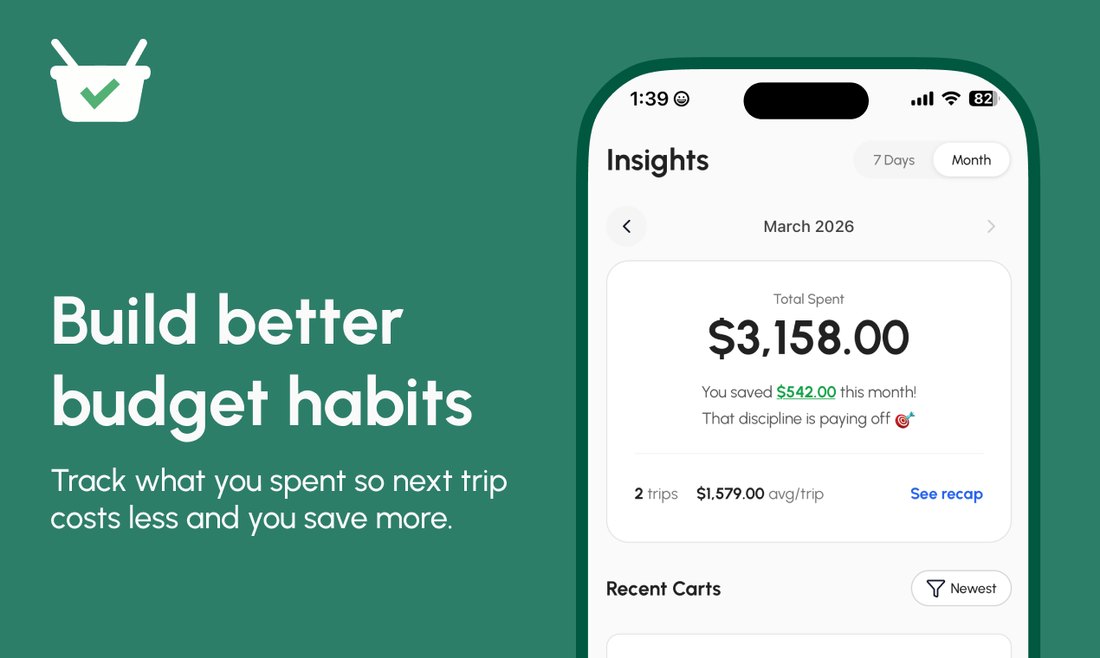
GroceryBudget closes that gap. Set a budget, add items as you shop, and watch the running total in real time — so you know where you stand against your target before you reach the register, not after the statement arrives. Its spending insights roll your trips into a monthly figure you can line up against the tables above.
The app is free to start, works offline, and needs no account. If you're still choosing a tracker, our best grocery budget apps of 2026 compares the main options side by side.
Download GroceryBudget free on the App Store.
Also on Android: Google Play.
---
Also useful: How Much Should You Spend on Groceries Per Month? for a deeper walk through the benchmarks, Grocery Budget by Income for a percentage-based approach, and How to Track Grocery Spending for the method behind getting an accurate number.
Frequently Asked Questions
How much should a family of four spend on groceries per month in 2026?+
The USDA Thrifty Food Plan puts a family of four at roughly $975–$995 per month (about $229 per week) in 2026, rising to about $1,450 on the Moderate plan and $1,900+ on the Liberal plan.
What is the USDA Thrifty Food Plan?+
It is the USDA's lowest-cost food plan that still meets nutrition guidelines, assuming all meals are cooked at home. It is also the basis for SNAP benefit amounts and is updated monthly for inflation.
How much do groceries cost per month for one person?+
On the USDA Thrifty plan, roughly $295 per month for an adult woman and $360 for an adult man in 2026. Moderate-plan figures run closer to $390–$500.
How much does the USDA Thrifty Food Plan cost for two adults per month in 2026?+
Around $610 per month for two adults (19–50) on the Thrifty plan in 2026 — about $141/week. That includes the USDA's +10% adjustment for two-person households. The Low-Cost plan runs closer to $660, Moderate to $820, and Liberal to $1,025.